What to forage in August
August is the turn of the season. The soft fruit of high summer is still coming — blackberries darkening in the hedge, plums and damsons weighing the branches — but the first real flush of autumn fungi has begun, and a good morning after warm rain can fill a basket. Walk the woodland edges and old oaks for brackets and boletes, the hedgerows and railway banks for fruit, and grazed pasture for grassland mushrooms once the dew is up. It is an easy month to over-pick, so take a share and leave the rest for the wildlife and the next forager. Some of what is ripe has toxic lookalikes or needs cooking — check each entry before you go.
New in August
Just coming into season — their harvest window opens this month.
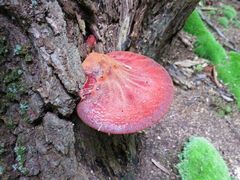
Fistulina hepatica
A thick, tongue- or liver-shaped bracket that grows singly low on the trunks of old oaks, usually within a metre or two of the ground.
Caution: Edible and not known to be poisonous, but the flesh is high in oxalic acid, so it is sour and best eaten in small amounts; anyone prone to kidney stones or gout may want to avoid it or seek advice.
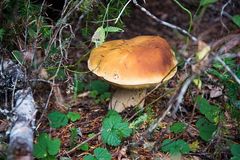
View field guide entry →Boletus edulis
A heavy, solid bolete with a smooth tan to chestnut cap that looks faintly greasy when damp and often keeps a paler rim, over a stout swollen stem marked with a fine pale network near the top.
Caution: No known toxins, but boletes are better cooked than raw, and old waterlogged caps or ones riddled with maggot tunnels can cause stomach upset.
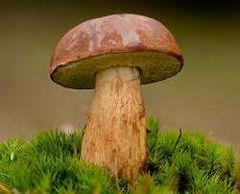
View field guide entry →Imleria badia
A brown bolete with a bay to deep chestnut cap, 4–15 cm across, matt and faintly velvety in dry weather but noticeably greasy after rain. Mycorrhizal with conifers, particularly Scots pine and spruce, and also with beech and oak.
Caution: Eat only cooked; like most boletes it is poorly tolerated raw.
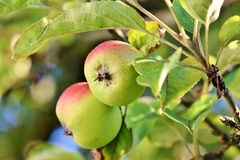
View field guide entry →Malus domestica
A small spreading tree with grey scaly bark and clusters of white, pink-flushed blossom in spring. Planted in orchards, gardens, allotments and churchyards, and widely naturalised from discarded cores along railway embankments, road verges, hedgerows and waste ground throughout Britain and Ireland.
Caution: The flesh is safe raw.
View field guide entry →Sambucus
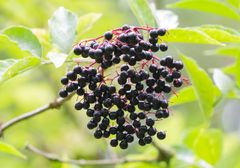
Elderberry is a deciduous shrub or small tree known for its clusters of white flowers and dark purple to black berries. Elderberry grows in hedgerows, woodland edges, and wasteland, typically thriving in temperate climates with moist, well-drained soil.
Caution: Elderberries contain toxins when raw, particularly in the seeds, stems, and unripe berries.
View field guide entry →Prunus domestica insititia
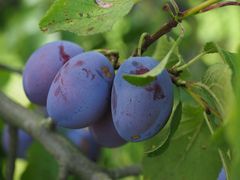
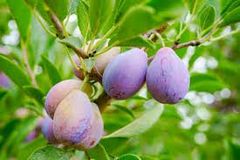
A small deciduous tree or dense large shrub, usually 4–6 m, bearing ovoid blue-black fruit 2–4 cm long under a heavy grey bloom. Old hedgerows, field boundaries, orchard edges and roadside scrub, often surviving as relics of former cultivation.
Caution: The ripe flesh is edible raw but sharply astringent until fully ripe, and is better cooked.
View field guide entry →Corylus avellana
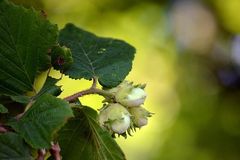
A multi-stemmed shrub or small tree of woodland edge and hedgerow, sending up several smooth stems from one base rather than a single trunk. Native throughout Britain and Ireland, growing as understorey in oak and ash woodland and in old hedgerows, scrub and worked coppice.
Caution: Hazelnut is among the more frequent causes of serious tree nut allergy, so anyone with a nut allergy should avoid it entirely.
View field guide entry →Laccaria amethystina
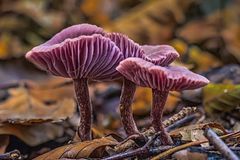
A small woodland mushroom, deep lilac-violet throughout when fresh: cap, widely spaced gills and tough twisted stem all much the same colour. Mycorrhizal, associating chiefly with beech and oak and also with birch and conifers, so it fruits from soil, leaf litter and mossy banks rather than from wood.
Caution: Edible cooked but slight, and Laccaria species are known to take up arsenic from the soil, so treat it as an occasional addition rather than a bulk crop and avoid ground likely to be contaminated.
View field guide entry →
At their peak in August
In the middle of their season and at their best right now.
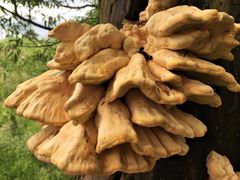
Laetiporus sulphureus
A bright sulphur-yellow to salmon-orange bracket that grows in overlapping fans and shelves from the trunks of living hardwoods, most often oak. Parasitic and then saprotrophic, causing a brown heart-rot inside standing hardwoods — oak most commonly, also sweet chestnut, willow, cherry and occasionally yew.
Caution: Always cook thoroughly; it is not eaten raw.
View field guide entry →Prunus domestica
A small deciduous tree or large shrub, usually 4–8 m, carrying oval to round fruit with a waxy bloom and a single flattened stone. Hedgerows, field margins, scrub, railway banks and abandoned orchards, often self-seeded from planted stock or spreading by suckers into thickets.
Caution: Ripe flesh is safe raw or cooked, but unripe fruit is astringent and can upset the stomach.
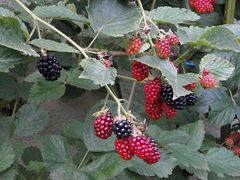
View field guide entry →Rubus fruticosus
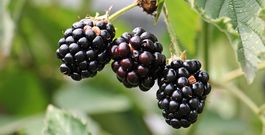
A scrambling, thorny shrub of the rose family that throws arching biennial canes over hedges, scrub and waste ground. Hedgerows, woodland edges and rides, scrub, railway banks, waste ground and neglected gardens, on almost any soil.
Caution: No part is toxic and the fruit needs no preparation, but pick above dog height and away from spray drift on arable field margins.
View field guide entry →Cantharellus cibarius
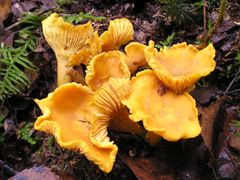
A firm, egg-yellow funnel with blunt, forking ridges running down onto a tapering stem rather than true gills. Mycorrhizal with broadleaves and conifers — oak, beech, birch and Scots pine — so it always pushes up from soil, moss or leaf litter, never from wood.
Caution: Cook thoroughly; raw or lightly cooked fruitbodies unsettle some stomachs.
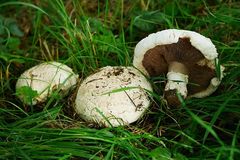
View field guide entry →Agaricus campestris
A white, dry-capped mushroom of open grassland, usually 3–10 cm across, domed then flattening, with a silky to faintly scaly surface. Saprotrophic in nutrient-rich short grassland — grazed pasture, meadows, lawns, playing fields and stabilised dunes — appearing in scattered troops or arcs a few days after rain.
Caution: Eat cooked and young; raw or in quantity it disagrees with some people.
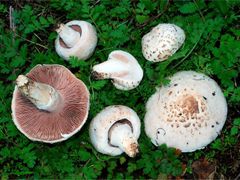
View field guide entry →Agaricus arvensis
A stout white grassland mushroom with a cap 8–20 cm across, dry and silky, often splitting into pale scale-like patches as it expands. Saprotrophic, fruiting in unimproved pasture, meadows, lawns, verges and dune grassland, often where livestock have grazed and sometimes in arcs or rings.
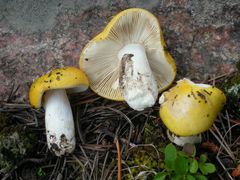
View field guide entry →Russula
Choice edible; cap bright egg-yolk yellow, convex then flattening with a slight central depression; surface sticky when moist, smooth when dry; cap cuticle peels halfway to the center; gills pale ochre, adnexed to almost free; white firm flesh that bruises grey slowly; fruity smell; pale ochre spore print.
Caution: Distinguished by its vivid yellow cap and habitat; similar species like Russula ochroleuca are duller and taste acrid.
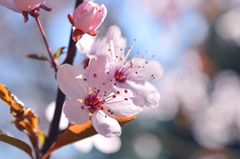
View field guide entry →Prunus cerasifera
A small tree or large shrub, often the first blossom of the year: white five-petalled flowers open on green twigs in February or March, before or just as the leaves appear. Not native, but planted and naturalised in hedgerows, roadside verges, scrub, railway banks, parks and gardens.
Caution: The flesh is edible raw once soft; hard underripe fruit is sour and can be laxative in quantity.
View field guide entry →
Last chance in August
The window is closing — these are largely done once the month turns.
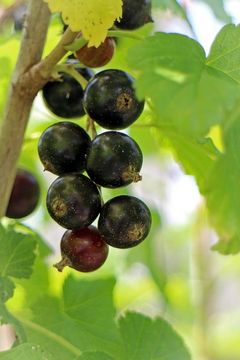
Ribes nigrum
A deciduous shrub to about 1.5 m with upright, thornless stems and shallowly lobed, maple-like leaves that smell strongly resinous when crushed. Damp, fertile soils in wet woodland, alder and willow carr, fen edges, stream banks and hedgerows.
Caution: No part is toxic and the berries can be eaten raw, though they are sharply acid and better cooked.
View field guide entry →Prunus
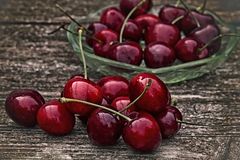
Cherries are small, round, and typically red or black fruit with a sweet or tart flavour, depending on the variety. In the UK, cherries are grown in orchards and gardens, often in the southern regions where the climate is warmer.
Caution: Cherries are generally safe to eat, but the pits should be avoided as they contain cyanogenic compounds.
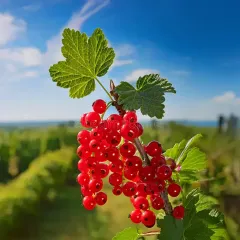
View field guide entry →Ribes rubrum
A thornless deciduous shrub of about 1–1.5 m with pale, maple-like lobed leaves, carrying translucent red berries in slender hanging strings through midsummer. Damp woodland, streamsides, hedge banks, old walls and wet scrub on richer soils, usually where birds have dropped seed from gardens.
Caution: The ripe berries carry no known toxicity and need no preparation beyond removing the stalks; the leaves and stems are not eaten.
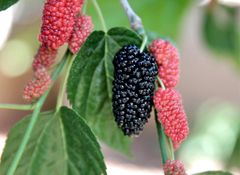
View field guide entry →Morus
Mulberries are small, sweet, and slightly tart berries that grow on trees, known for their rich purple to black colour when ripe. Mulberry trees are found in temperate climates and are common in gardens, orchards, and along roadsides in the UK.
View field guide entry →Rubus
Dewberries are closely related to blackberries, producing small, dark purple to black fruits with a sweet-tart flavour. Dewberries thrive in a variety of habitats, including hedgerows, woodlands, and fields across the UK.
Caution: Dewberries are generally safe to eat, but they can be difficult to distinguish from other wild fruits like poisonous berries or similar-looking plants.
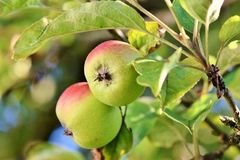
View field guide entry →Malus domestica
A very early dessert apple of Russian origin, medium-sized and faintly ribbed, the pale greenish-yellow skin flushed and striped crimson beneath a distinct bluish-white bloom. Not a wild plant.
Caution: The fruit is a straightforward edible.
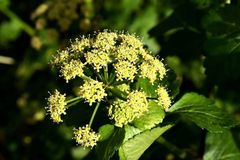
View field guide entry →Smyrnium olusatrum
A stout, upright umbellifer reaching about 1.5 m, with glossy dark green leaves divided into threes, broad bluntly toothed leaflets, and domed umbels of small yellow-green flowers from early spring.
Caution: Leaves, stalks, buds and seeds are eaten cooked or raw, though stems turn bitter and fibrous once flowering is under way, and the sap of many carrot-family plants can irritate sensitive skin in sunlight.
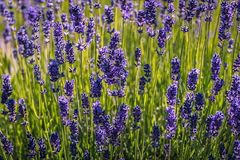
View field guide entry →Lavandula angustifolia
A low, domed evergreen shrub with woody lower stems, narrow grey-green leaves and short, dense spikes of violet-blue flowers held well clear of the foliage on slender, leafless stalks. A Mediterranean shrub of dry, sunny, free-draining ground, particularly chalk and limestone.
View field guide entry →
The buckets above are capped at the most-logged species. For everything in season this month, browse the full August list in the field guide →
What foragers actually logged in August
In August, foragers logged 4,756 finds — one of the busier months in the app. The species recorded most were Chicken of the woods (1,119), Beefsteak Fungus (513), Plums (337), Blackberry (321) and Chanterelle (258). Counts are aggregated across all foragers, with no location or personal detail.
Log your own finds
The calendar is built from what foragers record in the app. It's free, with no account needed to browse.

