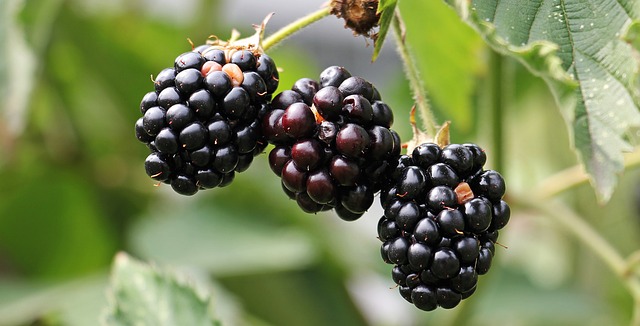
Blackberry
Rubus fruticosus
A scrambling, thorny shrub of the rose family that throws arching biennial canes over hedges, scrub and waste ground. The fruit is an aggregate of glossy black drupelets, ripening through green and red, and comes away from the plant with its pale core still inside. "Blackberry" covers several hundred near-identical microspecies within the Rubus fruticosus aggregate; the distinctions occupy botanists but make no practical difference in the kitchen, where all are used alike for eating raw, jams, crumbles and cordials.
Hedgerows, woodland edges and rides, scrub, railway banks, waste ground and neglected gardens, on almost any soil. Common and often dominant throughout Britain and Ireland, from the coast to the moorland edge, thinning only at altitude.
No part is toxic and the fruit needs no preparation, but pick above dog height and away from spray drift on arable field margins. Late-season fruit picks up moulds and rust, so leave berries that are dull, soft or grey-flecked. Canes carry curved prickles; long sleeves are worth the trouble.
Always use more than one reference to confirm a plant. You are responsible for what you choose to forage.
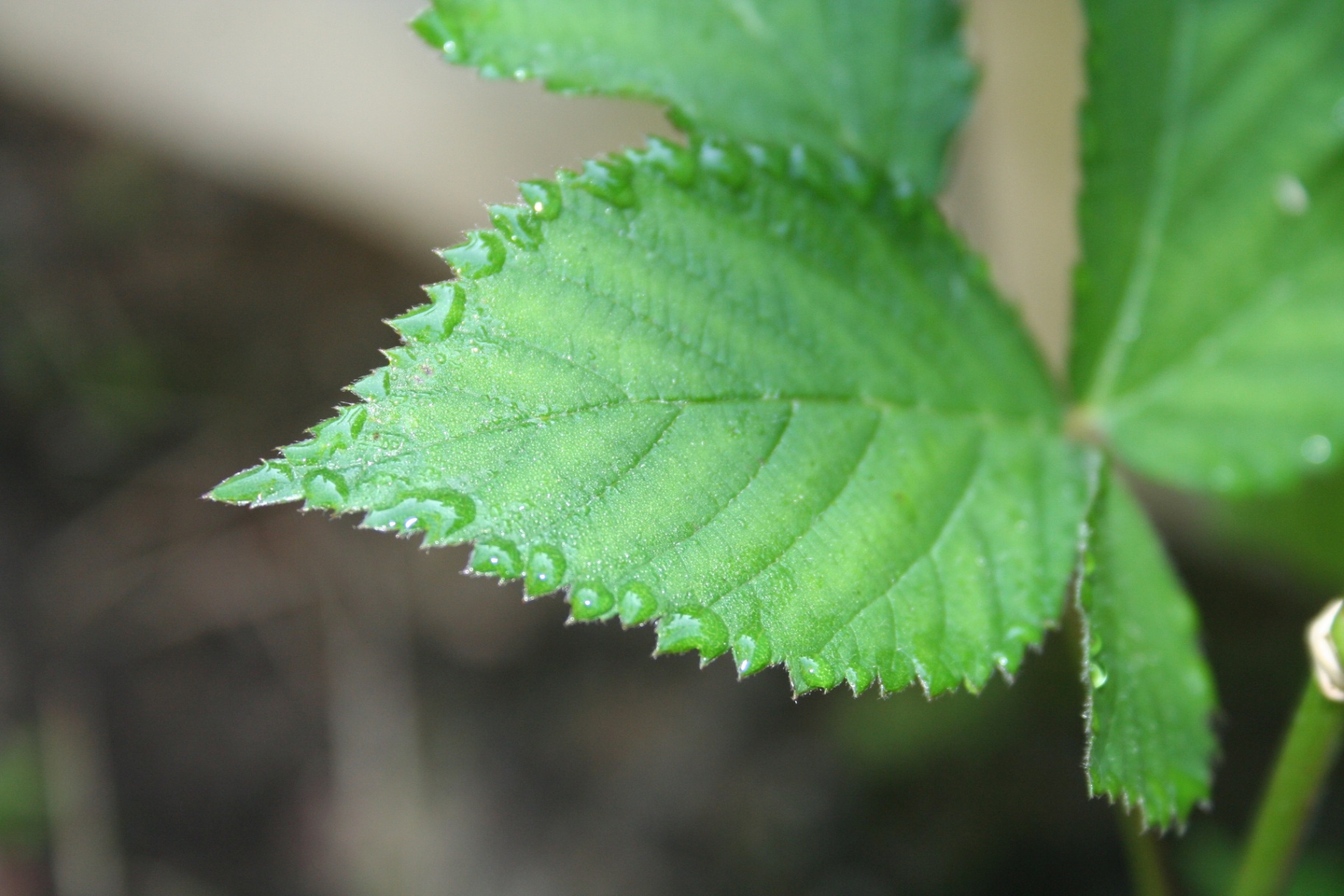
Palmate leaves
Leaves divided into 3 or 5 toothed leaflets arranged like a hand, often paler and downy underneath, with small prickles along the midrib.
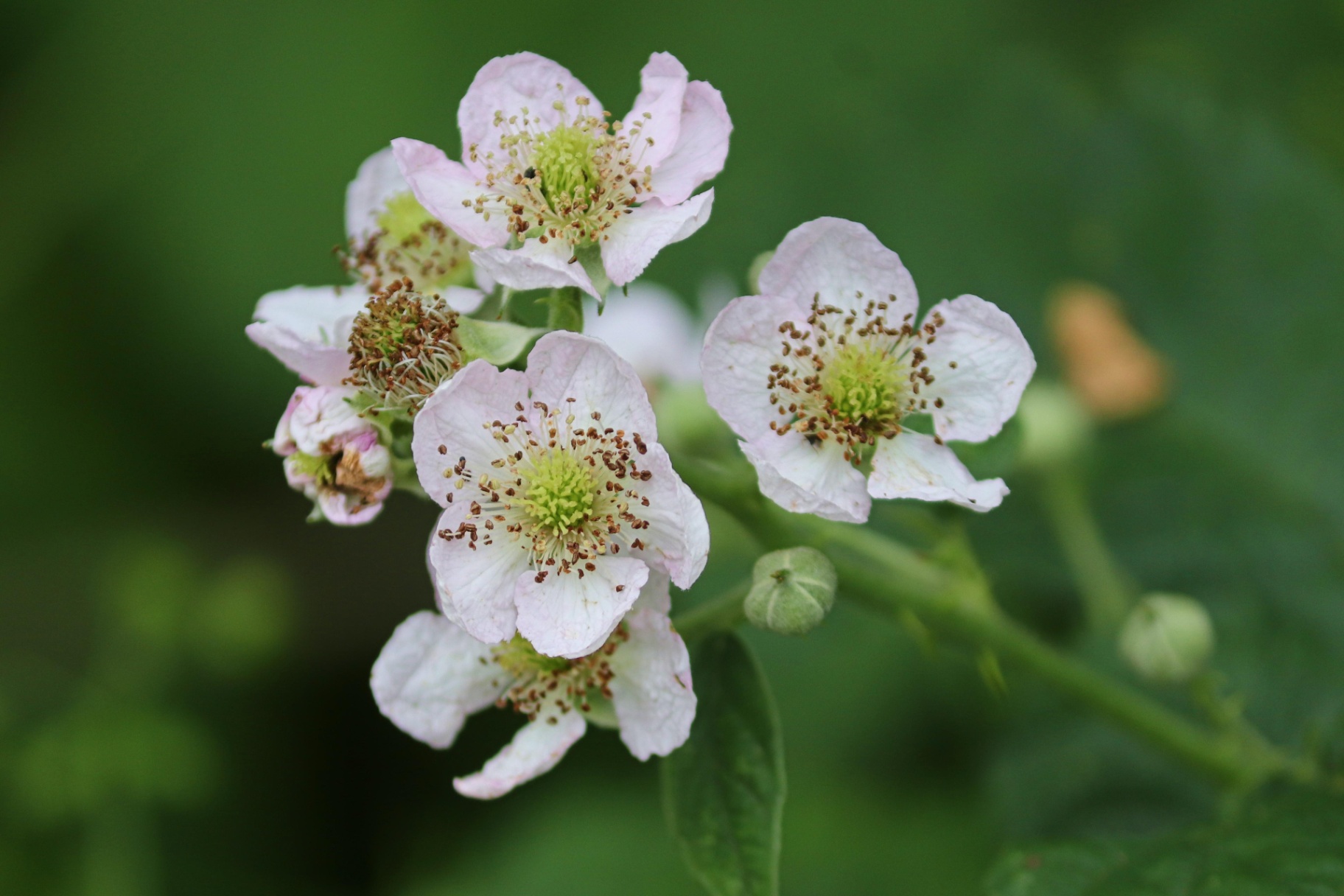
Five-petalled flowers
White to pale-pink flowers about 2–3cm across, with five petals, borne in clusters through summer.
Arching biennial canes
Stems are ridged or angular in cross-section and carry curved prickles along the ridges. A cane grows leafy in its first year, flowers and fruits in its second, then dies back, so a thicket always mixes green new growth with dying woody canes. Raspberry canes by contrast are round, upright and bristly rather than curve-prickled.
Fruit keeps its core
Each berry is a tight cluster of small drupelets pulled away with the pale central receptacle still inside, so a picked blackberry is solid rather than hollow. A raspberry leaves its core behind on the plant. Anything picked as a single glossy round berry rather than a cluster of drupelets is not a blackberry.
Leaf underside
Paler than the upper surface, often grey-felted, with small prickles running along the midrib beneath. Worth checking when the plant is neither in flower nor in fruit, since the prickled midrib rules out the unarmed hedgerow climbers brambles scramble among.
Updated 2026-08-09T20:49:45.519Z · Part of the shared Foragers Log catalogue · Fruit