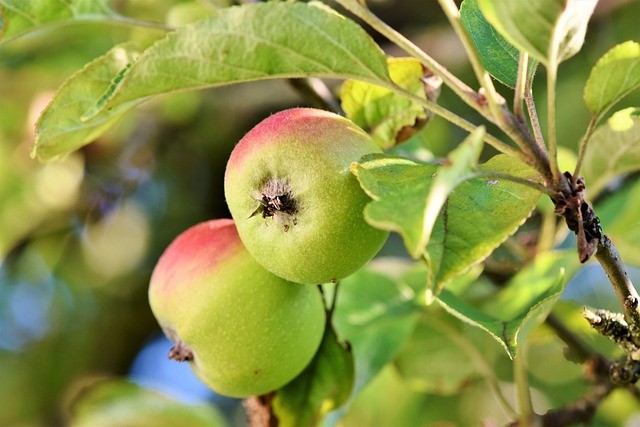
Red Åstrakan Apple
Malus domestica
A very early dessert apple of Russian origin, medium-sized and faintly ribbed, the pale greenish-yellow skin flushed and striped crimson beneath a distinct bluish-white bloom. The flesh is white, soft and sharply juicy, sometimes stained pink just under the skin. It ripens unevenly in high summer, bruises at a touch and will not store, so it is eaten within days of picking or cooked straight down into sauce and purée.
Not a wild plant. Grafted trees stand in old orchards, cottage gardens and allotments, sometimes persisting in hedgerows or on railway embankments where an orchard once stood. Very hardy, and grown throughout Britain and Ireland including northern and upland sites where later cultivars struggle to ripen.
The fruit is a straightforward edible. The pips contain amygdalin and are not worth eating in quantity, though a few swallowed with the flesh are of no consequence. Windfalls ferment fast and draw wasps, so check fruit before handling it. Orchard and roadside trees may have been sprayed or stand in traffic dust, and a tree in a garden or working orchard belongs to somebody — ask before picking.
Always use more than one reference to confirm a plant. You are responsible for what you choose to forage.
Skin colour and bloom
Pale greenish-yellow ground colour, broadly flushed and broken-striped in crimson, with a waxy bluish-white bloom that rubs off under a thumb. The bloom is unusually heavy for a summer apple and is the first thing visible on the tree from a few metres away.
Flesh
White and loose-textured rather than firm, often with a pink stain in the outer flesh below a well-coloured cheek. Sharp when first picked, softening to a bland pulp within days — a mealy interior means the fruit was left on the tree too long.
Ripening and drop
Ripens a few fruits at a time from mid-summer and drops as soon as it is ready, so a tree carries green and fully coloured apples together. Windfall under the tree in late July is a strong hint at an early cultivar rather than a mainstream autumn one.
Tree habit
Vigorous and spreading, flowering early in the blossom season and often a heavy but biennial cropper. Fruit is borne on short spurs and older wood, held on stout short stalks in tight clusters.
Updated 2026-08-07T20:46:10.746Z · Part of the shared Foragers Log catalogue · Fruit