What to forage in May
May is a hinge in the year. The first real fungus arrives — chicken of the woods bursting sulphur-yellow from oak — while the spring greens begin to bow out: wild garlic runs to flower and fades, and this is the last comfortable month to gather it. Ground elder is still at its peak, and the hedges are greening hard towards summer. It is a month of overlap, one season handing over to the next, and worth walking oak woodland for the first brackets as much as the hedgerows for leaves. Cook the chicken of the woods well and try only a little the first time — not everyone agrees with it.
New in May
Just coming into season — their harvest window opens this month.
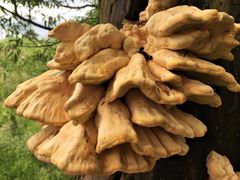
Laetiporus sulphureus
A bright sulphur-yellow to salmon-orange bracket that grows in overlapping fans and shelves from the trunks of living hardwoods, most often oak. Parasitic and then saprotrophic, causing a brown heart-rot inside standing hardwoods — oak most commonly, also sweet chestnut, willow, cherry and occasionally yew.
Caution: Always cook thoroughly; it is not eaten raw.
View field guide entry →Mentha spicata
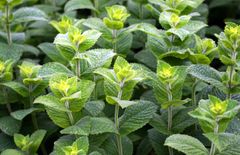
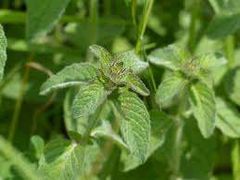
A patch-forming perennial mint with bright green, pointed, sharply toothed leaves set almost directly on a square stem, and pale lilac flowers packed into a slender spike at the shoot tip.
View field guide entry →Filipendula ulmaria
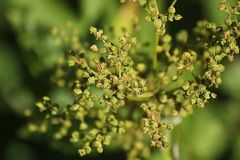
A tall perennial of damp ground, carrying frothy heads of tiny creamy-white flowers on reddish, ridged stems through high summer. Wet, neutral to base-rich ground: fens, marshes, wet meadows, ditches, riverbanks, damp woodland rides and verges that stay boggy.
Caution: No part is toxic, but the plant is rich in salicylates, so anyone who reacts badly to aspirin, is asthmatic, or takes anticoagulants has reason to leave it alone or seek advice first.
View field guide entry →Fragaria
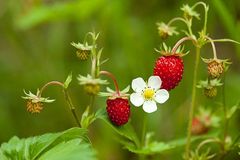
Strawberries are small, red, sweet fruits with tiny seeds on their surface. Strawberries grow best in well-drained, slightly acidic soil in gardens or fields, thriving in sunny areas.
Caution: Strawberries are generally safe, but they can cause allergic reactions in sensitive individuals.
View field guide entry →Lonicera caerulea
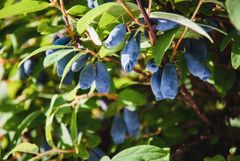
A low, twiggy deciduous shrub with oval, softly downy leaves in opposite pairs and oblong blue-black berries carried in twos along the shoots, each under a heavy pale bloom.
Caution: Ripe fruit needs no preparation, though it is sharply acidic until fully soft and dark to the centre.
View field guide entry →Mentha aquatica
A strongly aromatic wetland mint growing 30–90cm tall, with square, often purple-flushed stems and hairy, stalked, toothed leaves. Wet ground and shallow water — pond and lake margins, ditches, canal banks, marshes, fens, wet meadows and flushes in damp woodland.
View field guide entry →Melissa officinalis
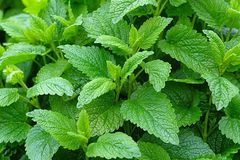
A soft, clump-forming perennial of the mint family, with square branching stems and wrinkled, deeply toothed leaves in opposite pairs that give off a clear lemon scent when crushed.
Caution: No known eating toxicity: the leaves are long established as a culinary herb and infusion.
View field guide entry →Mentha piperita
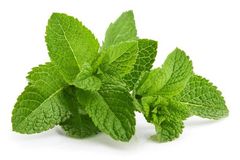
A strongly aromatic perennial of the mint family, reaching about 30–90 cm, with square, often purple-tinged stems and toothed, short-stalked dark green leaves.
Caution: The leaf is safe as a culinary herb and tea in ordinary amounts; concentrated peppermint oil is a different matter, can aggravate reflux, and is not given to infants.
View field guide entry →
At their peak in May
In the middle of their season and at their best right now.
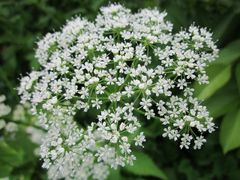
Aegopodium
Ground Elder is a perennial plant in the carrot family, known for its aggressive growth and spreading habit. Ground Elder thrives in shady, damp areas such as woodlands, hedgerows, and gardens, often forming dense colonies.
Caution: Ground Elder can be invasive, spreading rapidly via underground rhizomes and difficult to control once established.
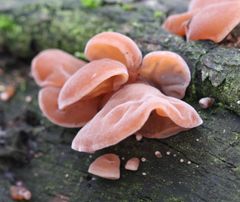
View field guide entry →Auricularia auricula-judae
A soft, rubbery bracket shaped like a cupped ear, usually 3-8cm across, tan to deep reddish-brown, with folds and veins across the smooth inner face and a fine velvety bloom on the outside.
Caution: Cook it thoroughly; raw or barely cooked it sits badly with some people.
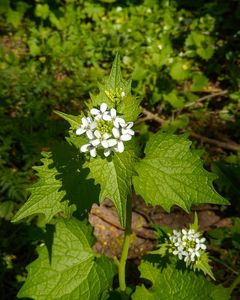
View field guide entry →Alliaria petiolata
A tall, upright biennial of hedge banks and shaded verges, with heart- to kidney-shaped, bluntly toothed leaves that give off a clear garlic smell when crushed.
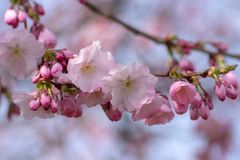
View field guide entry →Prunus subhirtella
A small ornamental cherry that flowers on bare wood in early spring, the pink semi-double blossom opening in stalked clusters before any leaves unfold. 'Accolade' is a garden hybrid grown for that display rather than for a crop; fruit sets sparsely if at all, and the small blackish cherries are bitter.
Caution: The flesh is not toxic, but the stones, leaves and twigs hold cyanogenic glycosides, so do not crush stones into a preserve or use the leaves as a tea.
View field guide entry →Salvia rosmarinus
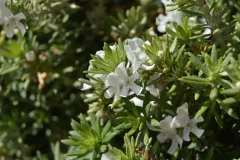
A dense evergreen shrub with woody, upright stems and stiff, needle-like leaves that are dark green above and pale grey-felted beneath, releasing a strong resinous, pine-and-camphor scent when crushed.
Caution: Safe as a culinary herb in ordinary cooking amounts; the concentrated essential oil is a different matter and is not for internal use.
View field guide entry →Urtica
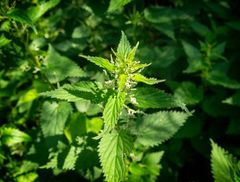
Nettle is a fast-growing herb known for its stinging hairs that cause skin irritation. Commonly found in woodlands, hedgerows, and disturbed areas like roadside verges.
Caution: Nettle's stinging hairs can cause skin irritation and allergic reactions.
View field guide entry →Chenopodium album
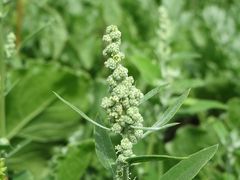
An upright annual of disturbed ground, reaching a metre or more, with diamond- to lance-shaped grey-green leaves dusted in a white mealy bloom and tight greenish spikes of tiny petal-less flowers. Arable field margins, allotments, gardens, muck heaps, building plots and other freshly turned, nitrogen-rich soil.
View field guide entry →Beta vulgaris maritima
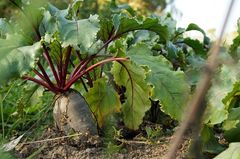
The wild ancestor of beetroot, chard and sugar beet: a sprawling coastal perennial with thick, glossy, dark green leaves, often flushed red, on ribbed reddish stems. A plant of the splash zone: shingle, sand, sea walls, cliff bases, the drier upper edges of saltmarsh and the top of strandlines.
Caution: Leaves are eaten cooked and, sparingly, raw, but like chard and spinach they carry oxalic acid, so anyone prone to kidney stones may prefer modest, cooked quantities.
View field guide entry →
Last chance in May
The window is closing — these are largely done once the month turns.
Allium ursinum
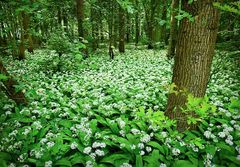
Broad, spear-shaped leaves rise singly from the woodland floor on long stalks, each one smelling strongly of garlic when crushed. Carpets damp, shaded broadleaf woodland, particularly on long-established woodland soils under beech, ash and hazel, and follows shaded stream banks and hedge bottoms.
Caution: Edible raw and cooked, though a lot of raw leaf can upset the stomach.
View field guide entry →Allium triquetrum
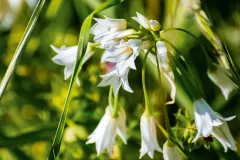
A slender spring allium with a sharply three-angled flowering stem and narrow, keeled leaves that smell strongly of garlic when crushed. A Mediterranean introduction, well naturalised on shaded hedge banks, woodland edges, churchyards, lane sides and damp verges, spreading by bulb offsets into dense carpets.
View field guide entry →Reynoutria japonica
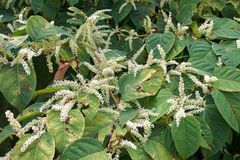
A tall herbaceous perennial with hollow, bamboo-like canes speckled purple-red, zig-zagging between swollen nodes, and shield-shaped leaves with a flat base. Forms dense stands on riverbanks, railway embankments, roadsides, waste ground and neglected gardens, on almost any soil.
View field guide entry →
The buckets above are capped at the most-logged species. For everything in season this month, browse the full May list in the field guide →
What foragers actually logged in May
In May, foragers logged 5,813 finds — one of the busier months in the app. The species recorded most were Wild Garlic (3,021), Chicken of the woods (1,228), Ground Elder (738), Plums (157) and Blackcurrant (89). Counts are aggregated across all foragers, with no location or personal detail.
Log your own finds
The calendar is built from what foragers record in the app. It's free, with no account needed to browse.

