Meadowsweet
Filipendula ulmaria
A tall perennial of damp ground, carrying frothy heads of tiny creamy-white flowers on reddish, ridged stems through high summer. The dark green leaves are pinnate, with sharply toothed leaflets and a large three-lobed leaflet at the tip, and are noticeably whitish and downy beneath. Crushed foliage smells sharply of almond and antiseptic, while the flowers are sweeter and honeyed; they are used to flavour cordials, vinegars, custards and cream, and were once strewn on floors and added to mead.
Wet, neutral to base-rich ground: fens, marshes, wet meadows, ditches, riverbanks, damp woodland rides and verges that stay boggy. Common and widespread across Britain and Ireland, thinning out only on dry or strongly acid soils.
No part is toxic, but the plant is rich in salicylates, so anyone who reacts badly to aspirin, is asthmatic, or takes anticoagulants has reason to leave it alone or seek advice first. Ditch and verge plants sit where spray drift and run-off collect, so pick back from field margins and rinse the flowerheads, which are usually full of small insects.
Always use more than one reference to confirm a plant. You are responsible for what you choose to forage.
Flowerhead
A dense, irregular, branching froth of tiny five-petalled creamy flowers with projecting stamens, giving a shaggy rather than flat outline. It is not the flat-topped umbel of a white umbellifer, and not a domed pink-tinged head.
Stem and habit
Upright, usually 60–120cm, the stem angular or ridged and often flushed reddish-purple. Leaves are set alternately up it, which separates it at a glance from the opposite-leaved plants of the same wet ground.
Leaf
Pinnate, with two to five pairs of sharply toothed leaflets, smaller leaflets tucked between the pairs, and a larger three- to five-lobed leaflet at the tip. Turn one over: the underside is whitish and felted, which is the most reliable feature before flowering.
Scent when crushed
Crushed leaves and stems smell sharply medicinal, of almond and antiseptic; the flowers are sweeter, closer to honey and marzipan. A plant with the right look but no scent at all is not this one.
Seedheads
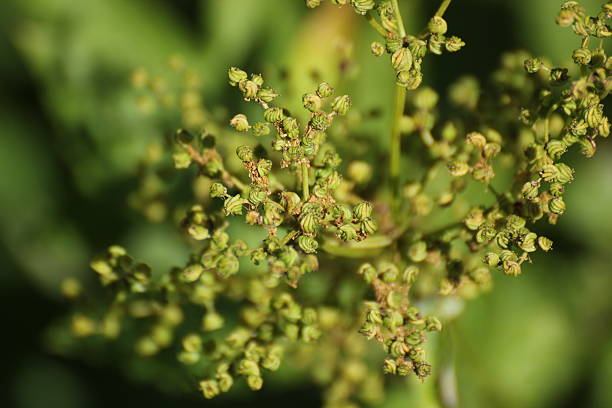
After flowering the small fruits sit in tight clusters of spirally twisted carpels, a feature that gave the plant its old name of Spiraea. They persist on dead stems into autumn and confirm a patch worth returning to.
Updated 2026-08-07T21:15:21.943Z · Part of the shared Foragers Log catalogue · Herb