What to forage in June
June is early summer, and the year turns from leaves to flowers and the first fruit. Cherries and gooseberries begin to ripen, dog rose and elder flower along the hedges, and chicken of the woods is at its peak on oak and other hardwoods. The lush abundance of spring greens is thinning as plants put their energy into flowering, so the interest shifts to hedgerow and woodland edge. It is a pretty, promising month rather than a heavy-harvest one — a time to note where the fruit is setting and come back for it later. Leave plenty of blossom on the elder if you want its berries in the autumn.
New in June
Just coming into season — their harvest window opens this month.
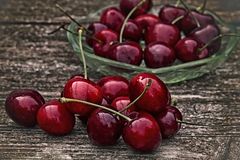
Prunus
Cherries are small, round, and typically red or black fruit with a sweet or tart flavour, depending on the variety. In the UK, cherries are grown in orchards and gardens, often in the southern regions where the climate is warmer.
Caution: Cherries are generally safe to eat, but the pits should be avoided as they contain cyanogenic compounds.
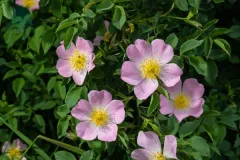
View field guide entry →Rosa canina
A scrambling hedgerow rose whose arching stems climb through other shrubs to three metres or more, armed with stout hooked thorns. Hedgerows, scrub, wood edges, railway banks and rough ground on most soils, doing best on chalk and clay.
Caution: The hairs packed round the seeds inside a hip irritate the mouth and gut and must be removed; scrape the hips out or strain pulp and syrup through muslin.
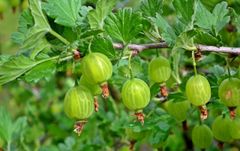
View field guide entry →Ribes uva-crispa
A low, spiny deciduous shrub, rarely over 1.5 m, with small palmately lobed leaves and translucent berries — green ripening to yellow-green, amber or dull red — marked with pale longitudinal veins.
Caution: The fruit carries no toxicity, though hard unripe berries are sharply acidic and eaten in quantity can upset the stomach; the leaves and stems are not eaten.
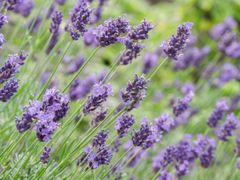
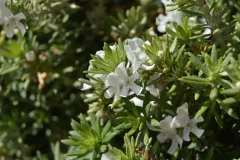
View field guide entry →Lavandula
Lavandula is a genus of 47 known species of flowering plants in the mint family, Lamiaceae. Dry grassy slopes amongst rocks, in exposed, usually parched, hot rocky situations often on calcareous soils.
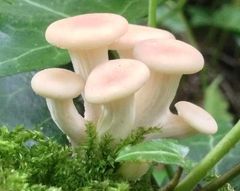
View field guide entry →Pleurotus
Good edible; decurrent gills; clustered, branched caps; mild aniseed-flour aroma; funnel-shaped cream to ochre caps
Caution: No known toxicity; edible; stems can be firm—caps preferred; ensure confident ID as other oyster mushrooms can look similar
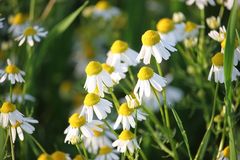
View field guide entry →Matricaria chamomilla
A slender, much-branched annual to about 50 cm with feathery, thread-fine leaves and long-stalked daisy heads a couple of centimetres across. An annual of open, disturbed ground: arable field margins, set-aside, waste ground, tracksides and cleared building plots, usually on light sandy or loamy soils.
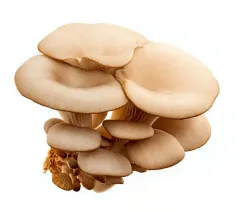
View field guide entry →Pleurotus
Oyster mushrooms are soft, edible mushrooms with a delicate flavour and velvety texture. They are typically found growing on decaying wood or in forests.
Caution: Oyster mushrooms are generally safe to eat, but wild varieties should be foraged with caution, as some look similar to poisonous species.
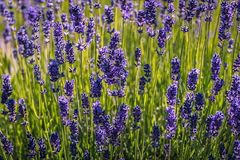
View field guide entry →Lavandula angustifolia
A low, domed evergreen shrub with woody lower stems, narrow grey-green leaves and short, dense spikes of violet-blue flowers held well clear of the foliage on slender, leafless stalks. A Mediterranean shrub of dry, sunny, free-draining ground, particularly chalk and limestone.
View field guide entry →
At their peak in June
In the middle of their season and at their best right now.
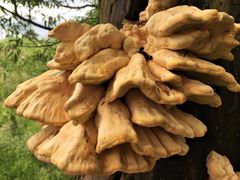
Laetiporus sulphureus
A bright sulphur-yellow to salmon-orange bracket that grows in overlapping fans and shelves from the trunks of living hardwoods, most often oak. Parasitic and then saprotrophic, causing a brown heart-rot inside standing hardwoods — oak most commonly, also sweet chestnut, willow, cherry and occasionally yew.
Caution: Always cook thoroughly; it is not eaten raw.
View field guide entry →Aegopodium
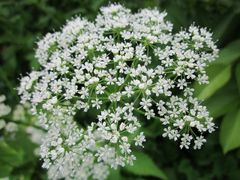
Ground Elder is a perennial plant in the carrot family, known for its aggressive growth and spreading habit. Ground Elder thrives in shady, damp areas such as woodlands, hedgerows, and gardens, often forming dense colonies.
Caution: Ground Elder can be invasive, spreading rapidly via underground rhizomes and difficult to control once established.
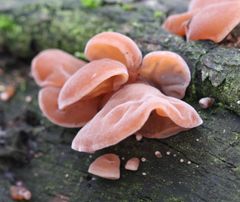
View field guide entry →Auricularia auricula-judae
A soft, rubbery bracket shaped like a cupped ear, usually 3-8cm across, tan to deep reddish-brown, with folds and veins across the smooth inner face and a fine velvety bloom on the outside.
Caution: Cook it thoroughly; raw or barely cooked it sits badly with some people.
View field guide entry →Salvia rosmarinus
A dense evergreen shrub with woody, upright stems and stiff, needle-like leaves that are dark green above and pale grey-felted beneath, releasing a strong resinous, pine-and-camphor scent when crushed.
Caution: Safe as a culinary herb in ordinary cooking amounts; the concentrated essential oil is a different matter and is not for internal use.
View field guide entry →Lonicera caerulea
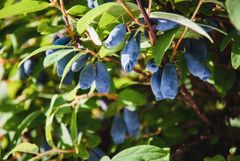
A low, twiggy deciduous shrub with oval, softly downy leaves in opposite pairs and oblong blue-black berries carried in twos along the shoots, each under a heavy pale bloom.
Caution: Ripe fruit needs no preparation, though it is sharply acidic until fully soft and dark to the centre.
View field guide entry →Urtica
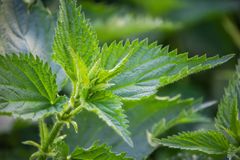
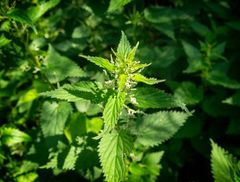
Stinging Nettle is a herbaceous perennial plant known for its stinging hairs that can cause skin irritation. Stinging Nettle is commonly found in moist, nitrogen-rich soils, particularly in woodlands, grasslands, along riverbanks, and disturbed areas like roadsides or gardens.
Caution: Stinging Nettle is covered in tiny, needle-like hairs that release irritants upon contact, causing a stinging sensation and rash.
View field guide entry →Plantago lanceolata
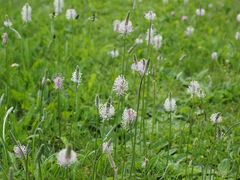
A flat rosette of narrow, lance-shaped leaves, each with three to five strongly marked parallel ribs that pull out as tough elastic threads when the leaf is torn. Abundant throughout Britain and Ireland on grassland, lawns, verges, tracks, field margins and waste ground, tolerating heavy trampling and thin poor soils.
Caution: No eating toxicity is recorded, though the tough lateral veins make older leaves stringy, so they are better cooked or strained than eaten raw.
View field guide entry →Alliaria petiolata
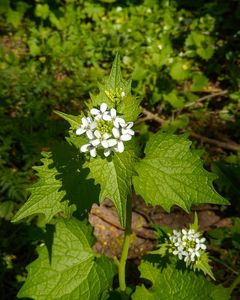
A tall, upright biennial of hedge banks and shaded verges, with heart- to kidney-shaped, bluntly toothed leaves that give off a clear garlic smell when crushed.
View field guide entry →
Last chance in June
The window is closing — these are largely done once the month turns.
Urtica
Nettle is a fast-growing herb known for its stinging hairs that cause skin irritation. Commonly found in woodlands, hedgerows, and disturbed areas like roadside verges.
Caution: Nettle's stinging hairs can cause skin irritation and allergic reactions.
View field guide entry →Cirsium palustre
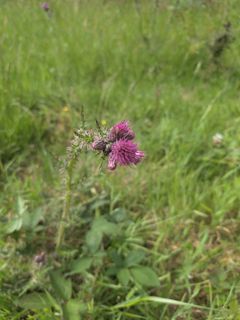
A tall biennial thistle carrying a single slender stem that is spiny-winged from base to tip, topped by tight clusters of small dark red-purple flowerheads. Wet ground: marshes, fens, rushy pasture, wet meadows, moorland flushes, and the damp sides of woodland rides and ditches.
Caution: Spines run the whole length of the winged stem and along every leaf edge, so gloves are wanted and stems need peeling before cooking.
View field guide entry →
The buckets above are capped at the most-logged species. For everything in season this month, browse the full June list in the field guide →
What foragers actually logged in June
In June, foragers logged 3,427 finds — one of the busier months in the app. The species recorded most were Chicken of the woods (947), Ground Elder (860), Wild Garlic (633), Plums (199) and Blackcurrant (87). Counts are aggregated across all foragers, with no location or personal detail.
Log your own finds
The calendar is built from what foragers record in the app. It's free, with no account needed to browse.

