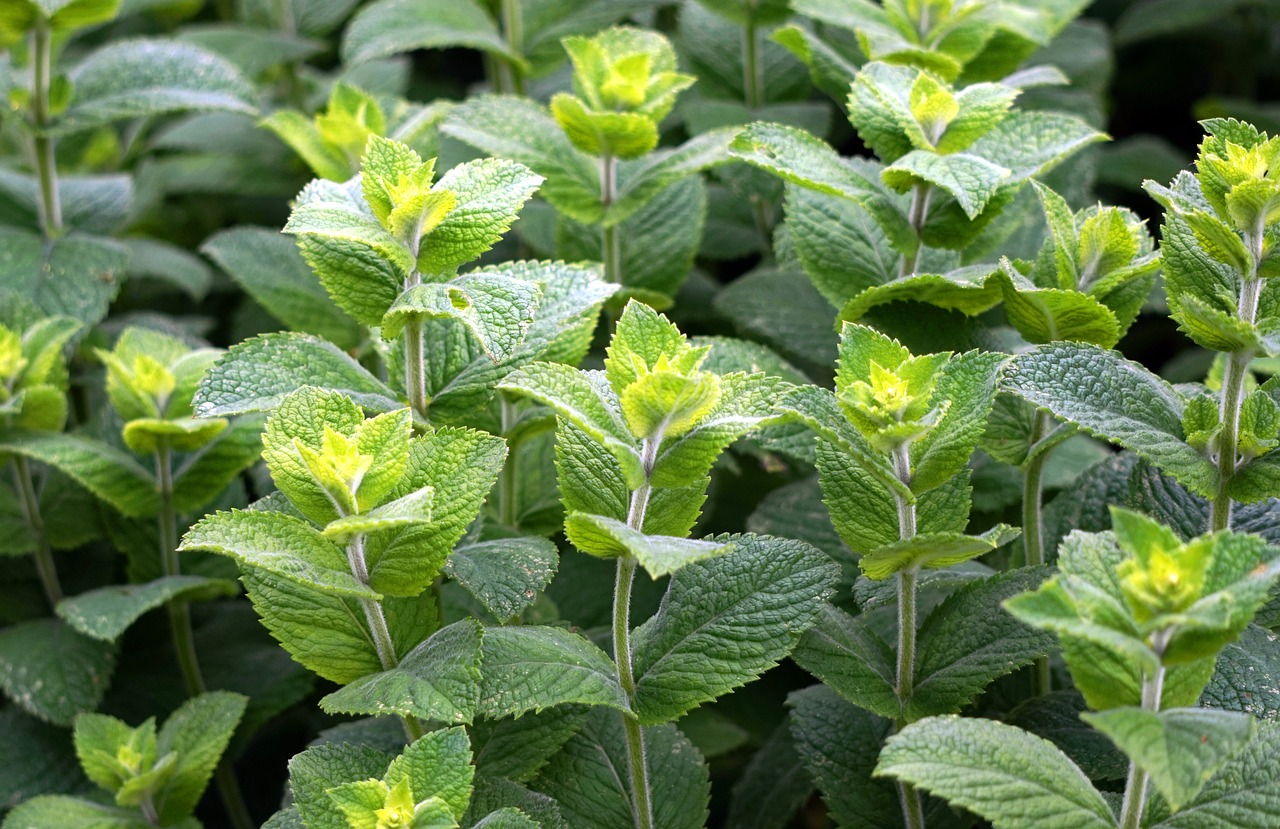
Spearmint
Mentha spicata
A patch-forming perennial mint with bright green, pointed, sharply toothed leaves set almost directly on a square stem, and pale lilac flowers packed into a slender spike at the shoot tip. Mints hybridise freely and intermediates are common, but for kitchen purposes the combination of near-stalkless leaves and a clean, sweet mint smell settles it. This is the usual mint of sauces, teas and cordials.
A naturalised garden escape rather than a true native, found on damp ditch banks, streamsides, verges, waste ground and old allotments through lowland Britain and Ireland. Spreads by shallow runners into loose single-clone patches on disturbed, moisture-retentive soil in sun or light shade.
Generally safe raw or cooked and used freely as a tea or flavouring, though concentrated mint oils are a different product and not a foraging one. Pennyroyal (Mentha pulegium) shares the same damp ground and smells strongly minty, but carries its flowers in dense whorls in the leaf axils up the stem rather than in one tapered terminal spike, and should not be eaten in quantity. Skip plants from verges of busy roads.
Always use more than one reference to confirm a plant. You are responsible for what you choose to forage.
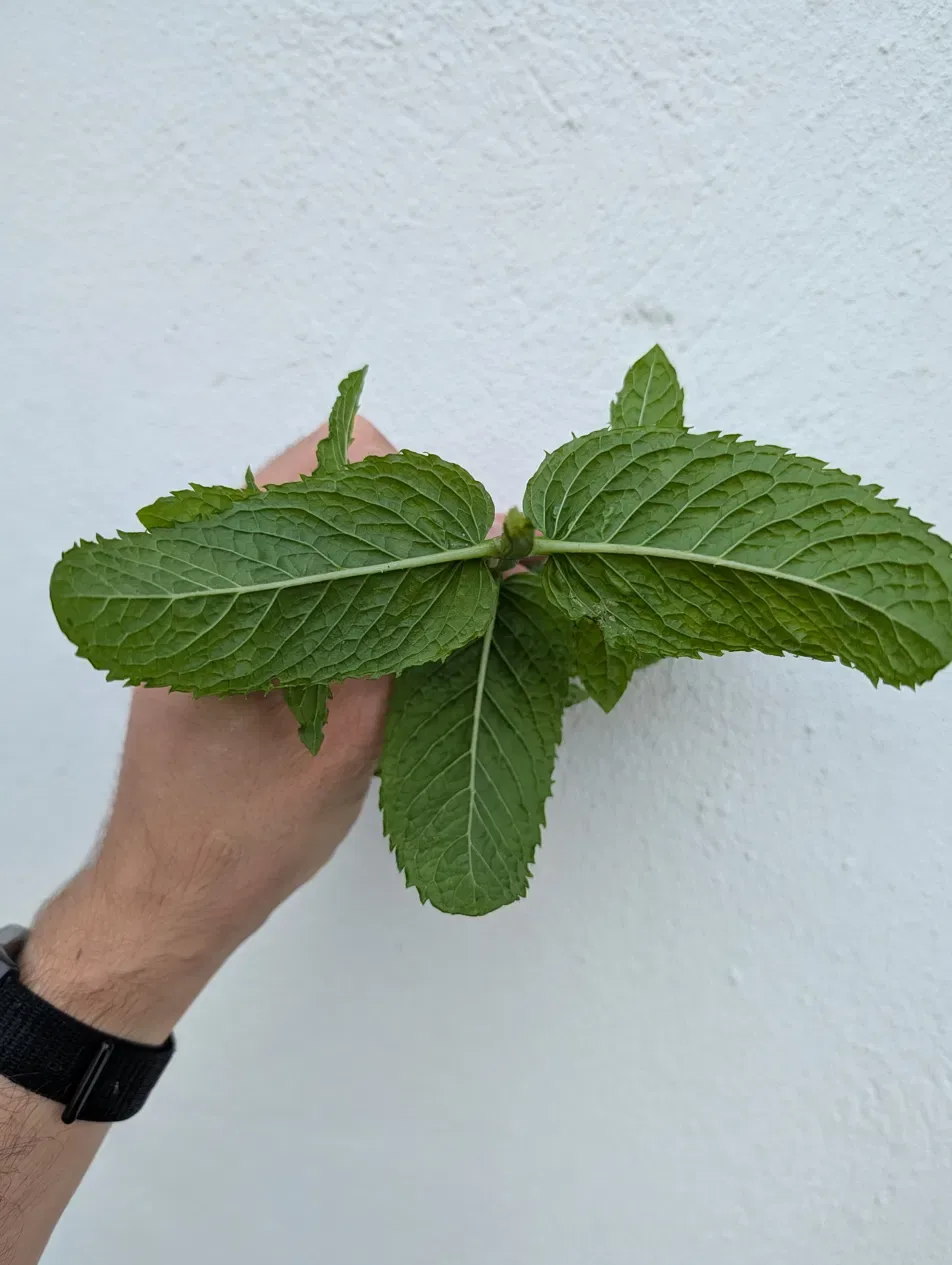
Leaves grow in opposite pairs
Leaves emerge two at a time from the same point on the stem, directly opposite each other, with each pair set at right angles to the pair above. This paired arrangement, together with a square stem, is the signature of the mint family.
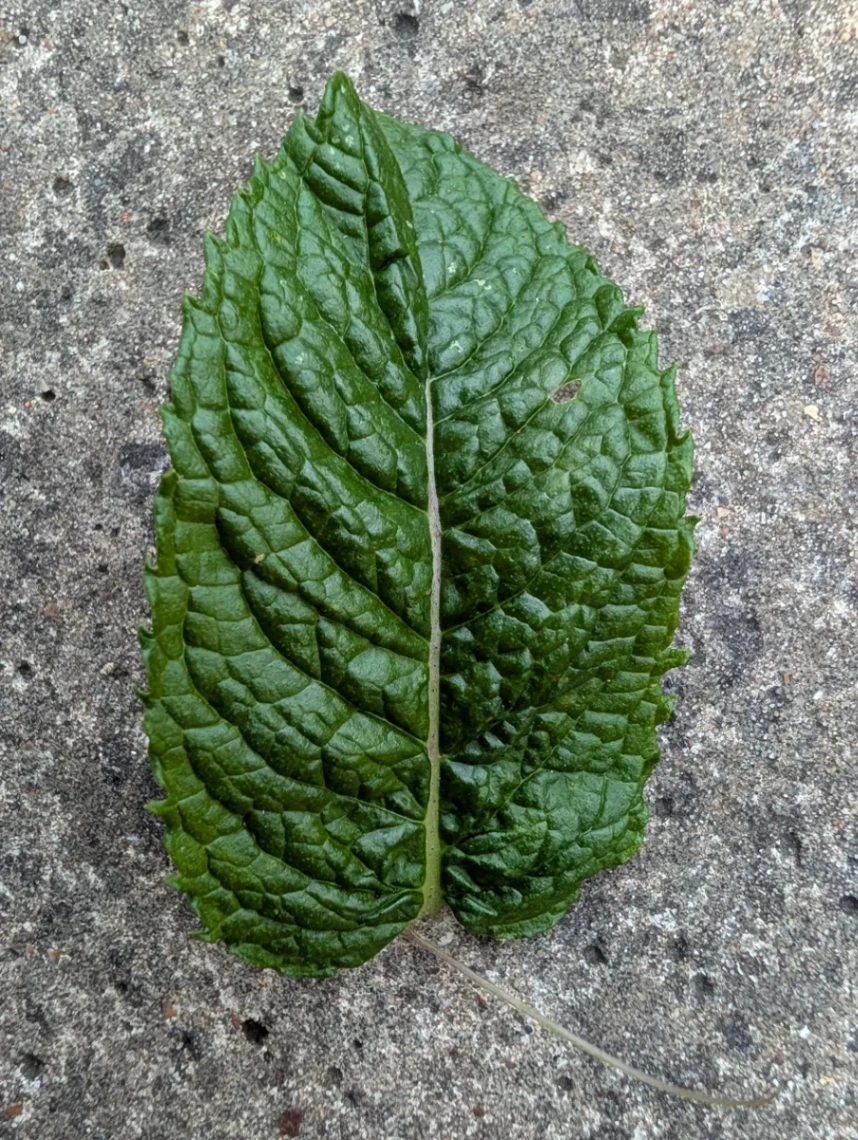
Bright green, crinkled, toothed leaves
Lance-shaped to oval leaves with a distinctly wrinkled, puckered surface, sharply toothed edges, and almost no leaf stalk — sitting close against the stem. Fresh growth is a vivid light green.
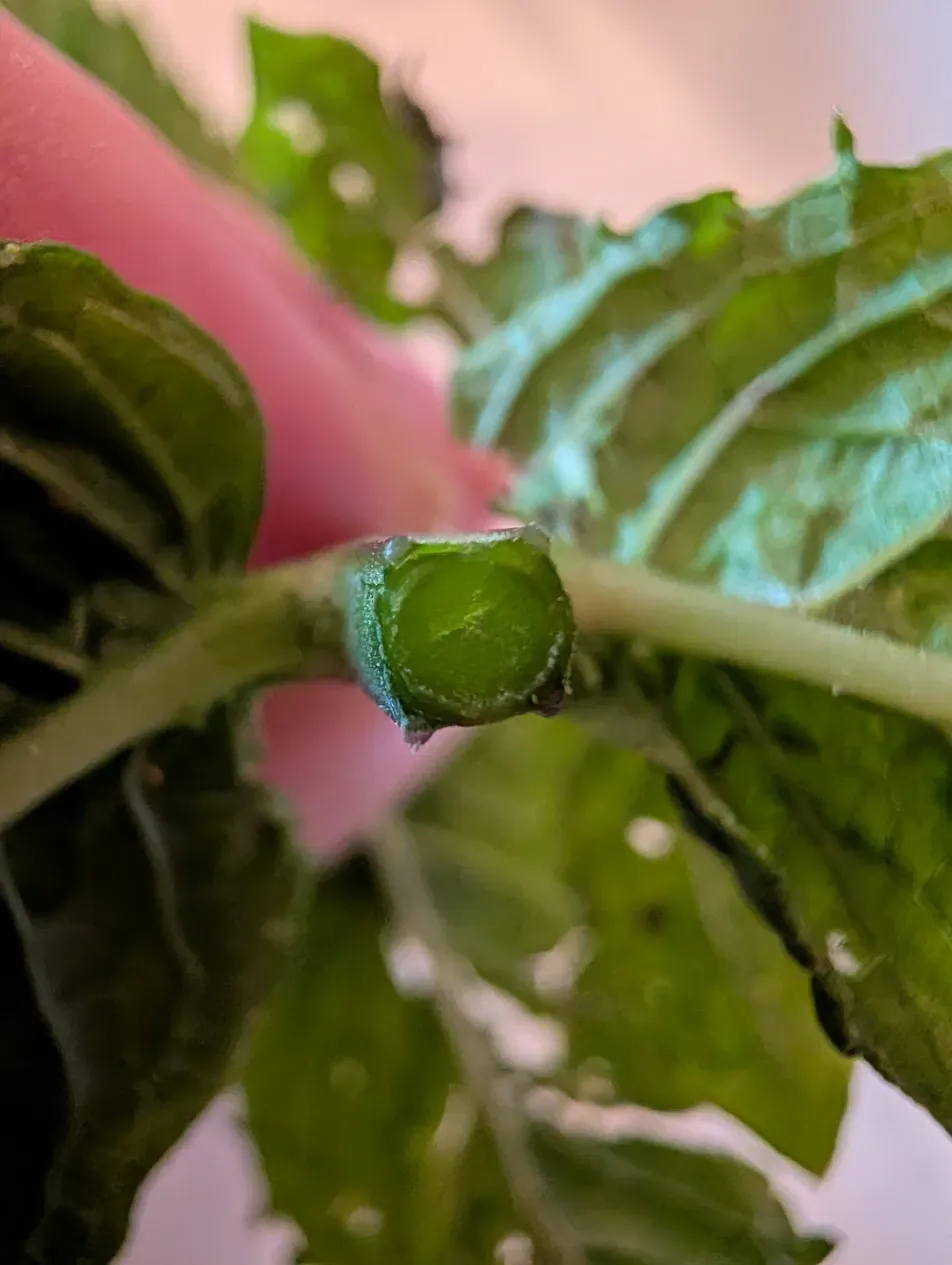
Four-sided stem
Roll the stem between finger and thumb and you'll feel four flat faces and sharp corners rather than a round stem. A square stem is shared across the whole mint family and is one of the quickest field confirmations.
Clean spearmint smell when crushed
Tear or crush a leaf and you should get an immediate, clean, sweet spearmint scent. This is the single most reliable confirmation. If the smell is musty, sour, or unpleasant rather than minty, it isn't culinary mint — set it aside.
Slender terminal flower spike
Pale lilac to white flowers crowd into a narrow, tapering spike at the tip of the shoot, from July onwards. Water mint carries its flowers in a rounded head and pennyroyal in whorls in the leaf axils along the stem.
Leaves almost stalkless
Leaf bases sit tight against the stem on a stalk of a millimetre or two at most. Peppermint and most garden mints hold their leaves on an obvious stalk, so this is the quickest check once you have the plant in hand.
Leaf surface nearly hairless
Run a thumb over the upper surface: sparse hairs at most, never woolly. A soft, felted, grey-green feel points to apple mint or one of its hybrids instead.
Patch-forming from surface runners
Grows as a dense stand of similar shoots spreading from shallow rhizomes, often several metres across and all one clone. A single isolated mint plant in damp ground is more likely a native species than this garden escape.
Updated 2026-08-08T12:03:07.858Z · Part of the shared Foragers Log catalogue · Herb