What to forage in November
November is the wind-down. The great autumn fungi flush is ending — horse mushrooms, boletes, beefsteak and hen of the woods having their last outing before hard frosts close the season — while sloes and sea buckthorn hang on in the hedges. Foraging thins quickly from here, so this is the month to make the most of what the woods and grassland still offer before winter. Walk woodland, pasture, coast and hedgerow while you can. As always in autumn, identify every fungus completely and leave anything doubtful; the cold does not make the poisonous species any safer, and there are fewer easy finds to fall back on now.
At their peak in November
In the middle of their season and at their best right now.
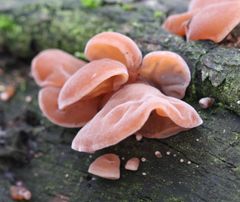
Auricularia auricula-judae
A soft, rubbery bracket shaped like a cupped ear, usually 3-8cm across, tan to deep reddish-brown, with folds and veins across the smooth inner face and a fine velvety bloom on the outside.
Caution: Cook it thoroughly; raw or barely cooked it sits badly with some people.
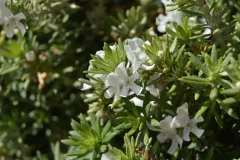
View field guide entry →Salvia rosmarinus
A dense evergreen shrub with woody, upright stems and stiff, needle-like leaves that are dark green above and pale grey-felted beneath, releasing a strong resinous, pine-and-camphor scent when crushed.
Caution: Safe as a culinary herb in ordinary cooking amounts; the concentrated essential oil is a different matter and is not for internal use.
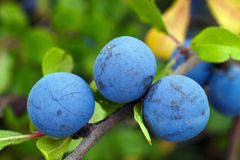
View field guide entry →Prunus spinosa
A dense, suckering shrub of hedge and scrub, almost black-barked, its stiff side-shoots ending in long sharp thorns. Hedgerows, wood edges, scrub and coastal thickets on most soils, common throughout Britain and Ireland.
Caution: The thorns puncture deeply and the wounds readily turn septic, so wear gloves and clean any scratch properly.
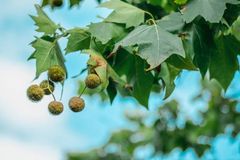
View field guide entry →Platanus acerifolia
A large, spreading hybrid tree whose bark flakes away in irregular plates to leave a cream, olive and grey patchwork, with alternate leaves cut into three to five shallow triangular lobes.
Caution: There is no established food use for any part of this tree.
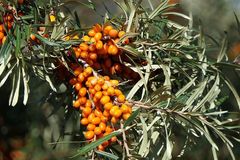
View field guide entry →Hippophae rhamnoides
A spiny, silver-leaved shrub of the coast, suckering into dense thickets and reaching about four metres. A pioneer of open sand dunes, shingle and soft coastal cliffs, fixing nitrogen through root nodules and so thriving on bare, poor sand.
View field guide entry →
Last chance in November
The window is closing — these are largely done once the month turns.
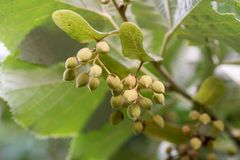
Tilia
Linden, also known as the lime tree (unrelated to citrus limes), is a deciduous tree with heart-shaped leaves and fragrant yellowish flowers. Common in UK parks, woodlands, and along roadsides.
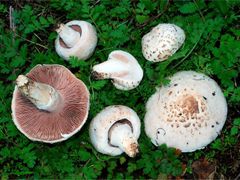
View field guide entry →Agaricus arvensis
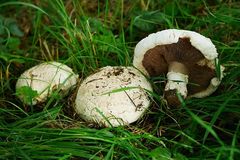
A stout white grassland mushroom with a cap 8–20 cm across, dry and silky, often splitting into pale scale-like patches as it expands. Saprotrophic, fruiting in unimproved pasture, meadows, lawns, verges and dune grassland, often where livestock have grazed and sometimes in arcs or rings.
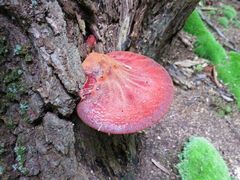
View field guide entry →Fistulina hepatica
A thick, tongue- or liver-shaped bracket that grows singly low on the trunks of old oaks, usually within a metre or two of the ground.
Caution: Edible and not known to be poisonous, but the flesh is high in oxalic acid, so it is sour and best eaten in small amounts; anyone prone to kidney stones or gout may want to avoid it or seek advice.
View field guide entry →Imleria badia
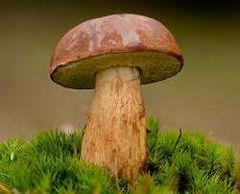
A brown bolete with a bay to deep chestnut cap, 4–15 cm across, matt and faintly velvety in dry weather but noticeably greasy after rain. Mycorrhizal with conifers, particularly Scots pine and spruce, and also with beech and oak.
Caution: Eat only cooked; like most boletes it is poorly tolerated raw.
View field guide entry →Boletus edulis
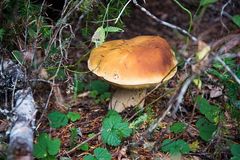
A heavy, solid bolete with a smooth tan to chestnut cap that looks faintly greasy when damp and often keeps a paler rim, over a stout swollen stem marked with a fine pale network near the top.
Caution: No known toxins, but boletes are better cooked than raw, and old waterlogged caps or ones riddled with maggot tunnels can cause stomach upset.
View field guide entry →Grifola frondosa
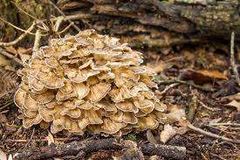
A large clustered polypore that grows as a rounded mass of overlapping grey-brown fronds at the foot of an oak, each frond a spoon-shaped cap arising from a branch of a common pale stem base.
View field guide entry →Agaricus campestris
A white, dry-capped mushroom of open grassland, usually 3–10 cm across, domed then flattening, with a silky to faintly scaly surface. Saprotrophic in nutrient-rich short grassland — grazed pasture, meadows, lawns, playing fields and stabilised dunes — appearing in scattered troops or arcs a few days after rain.
Caution: Eat cooked and young; raw or in quantity it disagrees with some people.
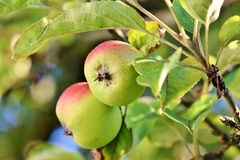
View field guide entry →Malus domestica
A small spreading tree with grey scaly bark and clusters of white, pink-flushed blossom in spring. Planted in orchards, gardens, allotments and churchyards, and widely naturalised from discarded cores along railway embankments, road verges, hedgerows and waste ground throughout Britain and Ireland.
Caution: The flesh is safe raw.
View field guide entry →
The buckets above are capped at the most-logged species. For everything in season this month, browse the full November list in the field guide →
What foragers actually logged in November
In November, foragers logged 2,451 finds — a decent sample. The species recorded most were Linden (900), Ground Elder (149), Horse Mushroom (135), Beefsteak Fungus (117) and Bay Bolete (107). Counts are aggregated across all foragers, with no location or personal detail.
Log your own finds
The calendar is built from what foragers record in the app. It's free, with no account needed to browse.

