What to forage in February
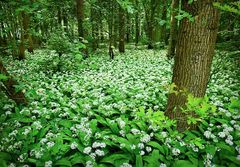
February is when the year starts to stir. Wild garlic begins to carpet damp woodland floors, and its scent will reach you before you see it; jelly ear is still out on elder, and the first garlic mustard leaves show along sheltered hedge banks. It is still a lean month — the ground is cold and most fruit is a season away — but the balance is tipping towards green. Head for ancient and damp woodland and south-facing hedge banks where the soil warms first. Pick young leaves sparingly, and be sure of your identification before anything from the carrot family goes in the basket.
New in February
Just coming into season — their harvest window opens this month.
Allium ursinum
Broad, spear-shaped leaves rise singly from the woodland floor on long stalks, each one smelling strongly of garlic when crushed. Carpets damp, shaded broadleaf woodland, particularly on long-established woodland soils under beech, ash and hazel, and follows shaded stream banks and hedge bottoms.
Caution: Edible raw and cooked, though a lot of raw leaf can upset the stomach.
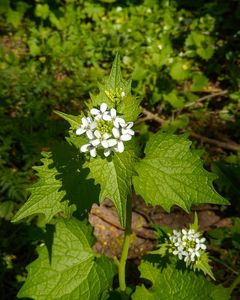
View field guide entry →Alliaria petiolata
A tall, upright biennial of hedge banks and shaded verges, with heart- to kidney-shaped, bluntly toothed leaves that give off a clear garlic smell when crushed.
View field guide entry →
At their peak in February
In the middle of their season and at their best right now.
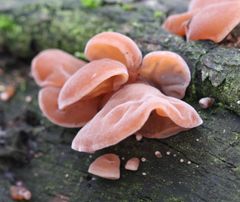
Auricularia auricula-judae
A soft, rubbery bracket shaped like a cupped ear, usually 3-8cm across, tan to deep reddish-brown, with folds and veins across the smooth inner face and a fine velvety bloom on the outside.
Caution: Cook it thoroughly; raw or barely cooked it sits badly with some people.
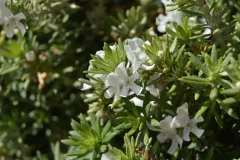
View field guide entry →Salvia rosmarinus
A dense evergreen shrub with woody, upright stems and stiff, needle-like leaves that are dark green above and pale grey-felted beneath, releasing a strong resinous, pine-and-camphor scent when crushed.
Caution: Safe as a culinary herb in ordinary cooking amounts; the concentrated essential oil is a different matter and is not for internal use.
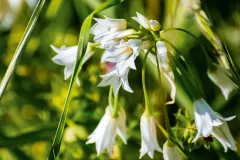
View field guide entry →Allium triquetrum
A slender spring allium with a sharply three-angled flowering stem and narrow, keeled leaves that smell strongly of garlic when crushed. A Mediterranean introduction, well naturalised on shaded hedge banks, woodland edges, churchyards, lane sides and damp verges, spreading by bulb offsets into dense carpets.
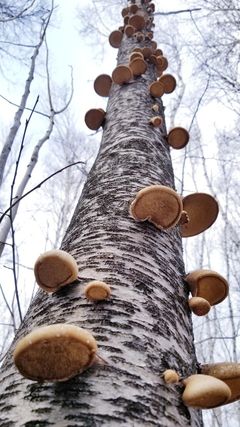
View field guide entry →Betula
Birch Polypore is a bracket fungus that grows on birch trees, forming large, leathery, hoof-shaped fruiting bodies. Birch Polypore is found in UK woodlands and forests, particularly in areas with birch trees.
Caution: Although not toxic, Birch Polypore is tough and bitter, making it unsuitable for culinary use.
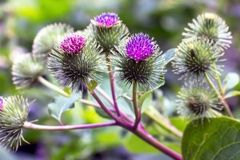
View field guide entry →Arctium lappa
A robust biennial that puts up a stout branched stem to 2m in its second year, carrying globes of hooked green bracts tipped with purple florets — the burrs that catch in clothing and dog hair.
Caution: No eating toxicity is recorded from the root, leaf stalks or peeled stems, though the root is best scrubbed or peeled and cooked; raw it is fibrous and bitter.
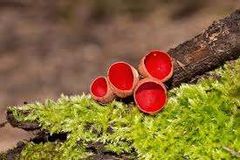
View field guide entry →Sarcoscypha austriaca
A small, vividly scarlet cup, usually 1–5cm across, sitting on damp deadwood through the coldest months. Saprotrophic on damp, decaying hardwood — commonly willow, hazel and elm branches lying half-buried in leaf litter or hidden under moss.
Caution: No dangerous lookalikes: the other UK Sarcoscypha species are separable only under a microscope and are regarded the same way.
View field guide entry →
Last chance in February
The window is closing — these are largely done once the month turns.
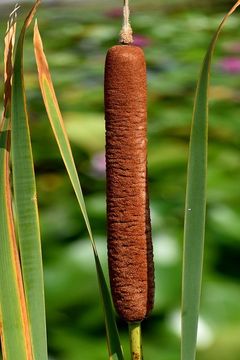
Typha latifolia
A tall emergent perennial of still fresh water, spreading by thick creeping rhizomes into dense, often single-species stands.
Caution: No toxins are recorded in the plant, but the best parts sit underwater: rhizomes take up pollutants and bacteria from the water they grow in, so leave stands fed by road runoff, farm drainage or sewage.
View field guide entry →
The buckets above are capped at the most-logged species. For everything in season this month, browse the full February list in the field guide →
What foragers actually logged in February
In February, foragers logged 548 finds — a smaller sample, so treat it as a rough guide rather than a trend. The species recorded most were Wild Garlic (238), Ground Elder (48), Chicken of the woods (48), Jelly ear fungus (28) and Blackberry (25). Counts are aggregated across all foragers, with no location or personal detail.
Log your own finds
The calendar is built from what foragers record in the app. It's free, with no account needed to browse.

