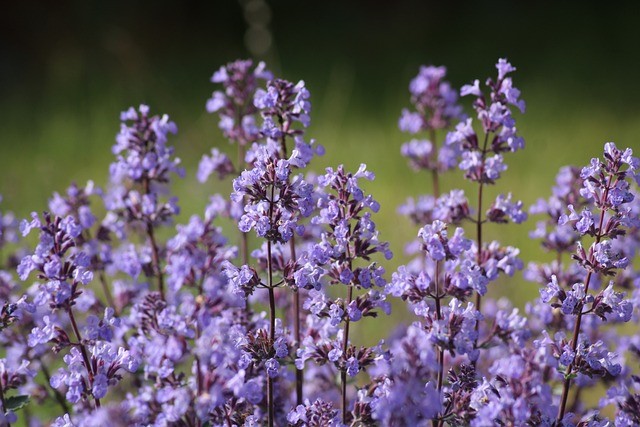
Catmint
Nepeta cataria
A tall, greyish member of the mint family, with square stems, heart-shaped and coarsely toothed leaves that are white-felted underneath, and crowded whorls of small white flowers finely spotted with purple on the lower lip. The crushed leaf smells sharply of mint and camphor rather than of culinary mint. Leaves and flowering tops are dried for tea, and the young leaves used sparingly as a strong seasoning.
Dry, disturbed and well-drained ground: hedge banks, roadside verges, railway land, farmyards, quarry edges and waste places, often on chalky soils. Introduced and naturalised in Britain and Ireland, scattered and local, commonest in central and southern England and frequently a garden escape.
Widely drunk as a tea and not regarded as poisonous, but the flavour is strong and large quantities can bring on nausea, vomiting or drowsiness; it has traditionally been avoided in pregnancy, and anyone on sedative medication may want to check before using it regularly. The plant favours verges and yard edges, so pick well back from traffic and away from ground likely to be sprayed.
Always use more than one reference to confirm a plant. You are responsible for what you choose to forage.
Leaves
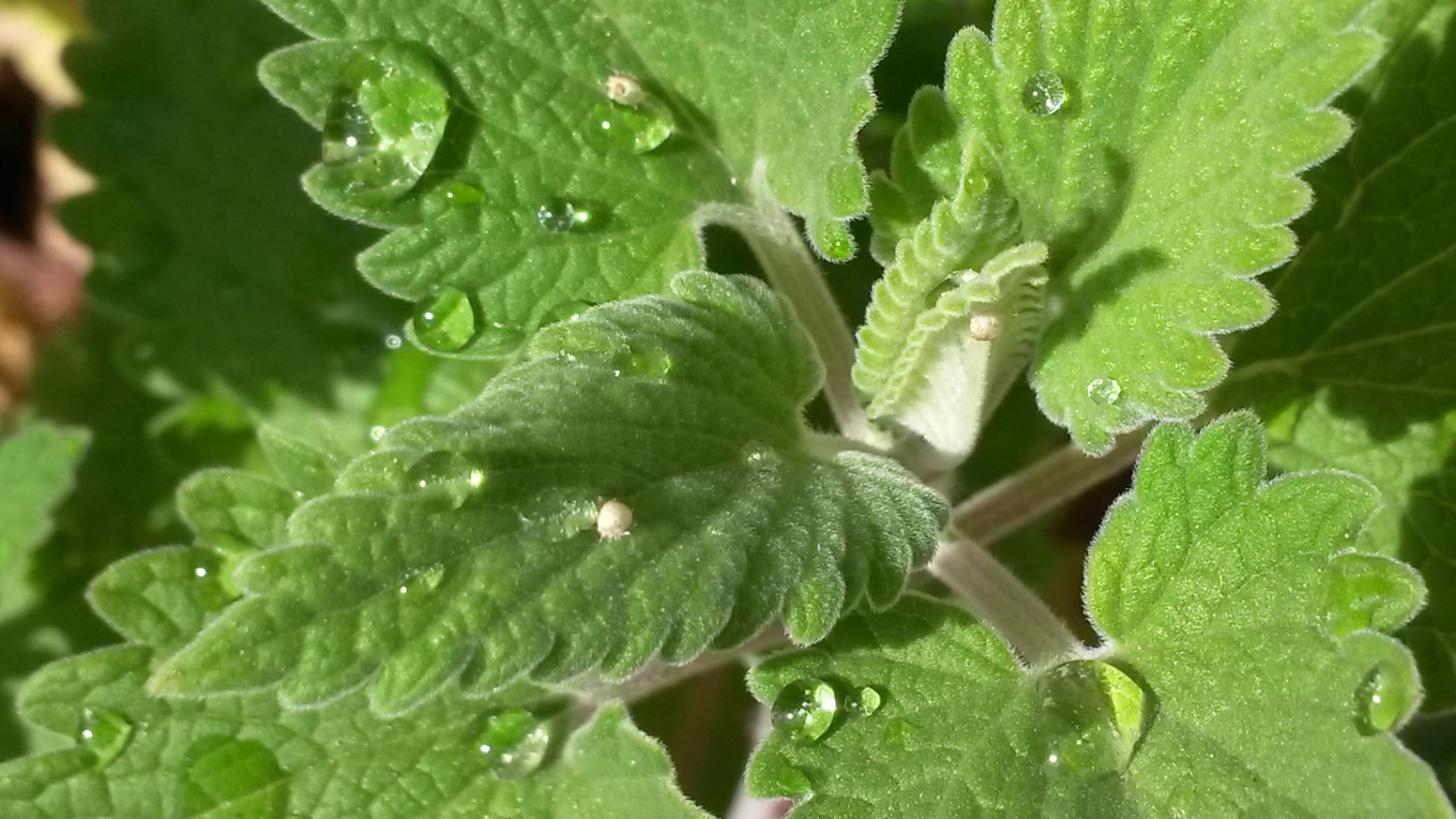
Opposite, triangular to heart-shaped, coarsely and bluntly toothed, on clear leaf stalks. The undersides are white-felted, so the leaf is markedly paler beneath than above — turn one over before going any further.
Flowers
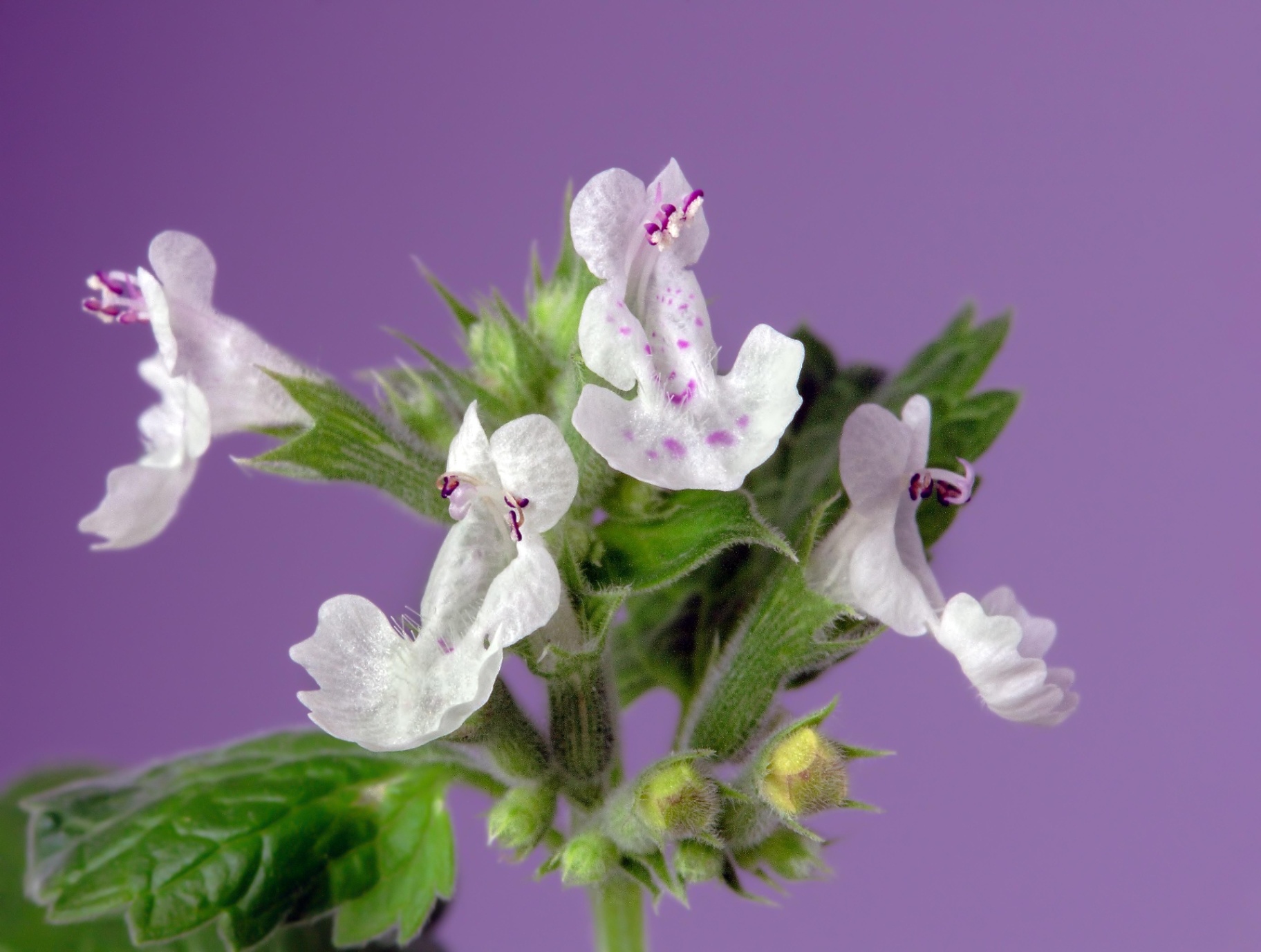
Small white two-lipped flowers about 7–12mm long, the lower lip finely spotted with purple-pink, packed into dense whorls forming short spikes at the tips of the stems rather than scattered along them.
Overall look and stature
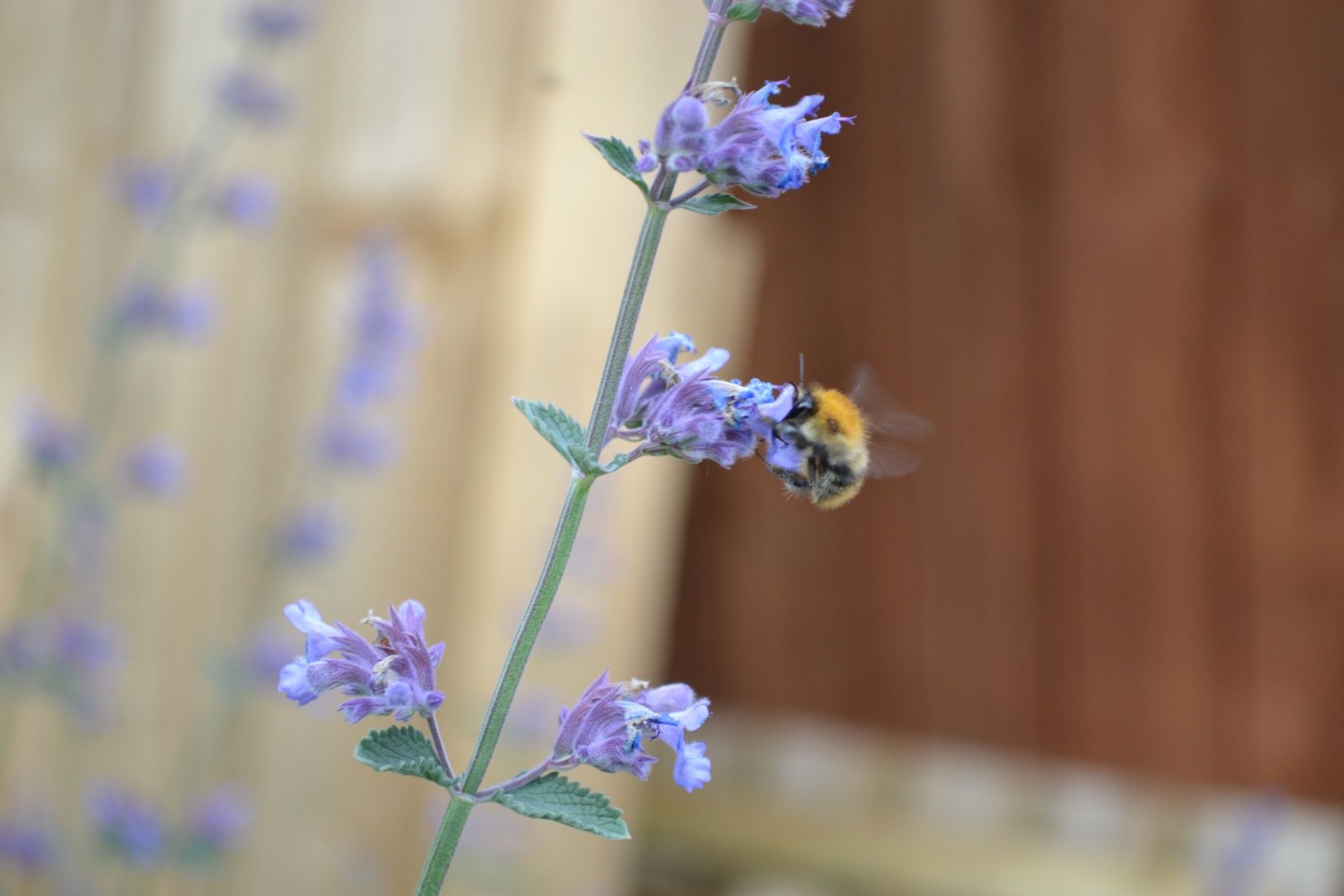
An upright, branched perennial 40–100cm tall with square stems, the whole plant looking greyish-green and softly downy from two metres away. That grey cast separates it at a glance from the true mints, which read as plain green.
Smell of a crushed leaf
Sharp and pungent, mint crossed with camphor and closer to a medicine cabinet than to a kitchen. A clean menthol smell points to a Mentha, a lemon smell to Lemon Balm; neither is this plant.
Compared with garden catmints
The ornamental catmints grown in borders, Nepeta racemosa and Nepeta × faassenii, are lower, with small narrow leaves and lavender-blue flowers. This species is the tall, white-flowered one, and the one traditionally used for tea.
Updated 2026-08-09T11:16:12.080Z · Part of the shared Foragers Log catalogue · Herb