Stevia
Stevia rebaudiana
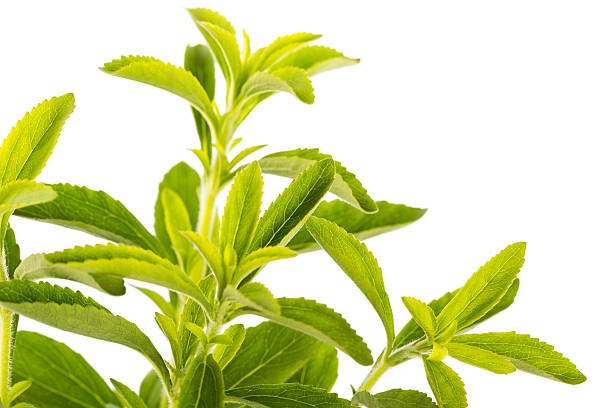
A bushy, tender perennial of the daisy family, growing 30–80 cm with brittle, finely hairy stems and opposite, shallowly toothed leaves. A leaf tip crushed on the tongue is intensely sweet, with a faint liquorice edge — the sweetness comes from steviol glycosides in the leaf. Grown for the fresh or dried leaf, used to sweeten teas and infusions.
Not naturalised in Britain or Ireland; native to damp upland grassland and stream margins on the Paraguay–Brazil border. Here it is a container or greenhouse plant, needing free-draining soil, full sun and frost-free overwintering.
Leaves carry no known toxicity in culinary amounts, and there are no wild UK lookalikes — this is a grown plant, not a found one. As a member of the daisy family it may affect people sensitive to Asteraceae. Only purified steviol glycosides (E960) are authorised as a sweetener in Great Britain; whole leaf is not, which bears on sale rather than home use.
Always use more than one reference to confirm a plant. You are responsible for what you choose to forage.
Leaves
Opposite pairs, obovate to lance-shaped, roughly 2–5 cm long, with shallow teeth confined to the upper half and three main veins running from the base. They sit almost stalkless against the stem.
Taste of a crushed leaf
A leaf tip crushed on the tongue turns sweet within a second or two, well beyond the sweetness of any culinary herb, followed by a slight liquorice or bitter aftertaste. A leaf that is merely green-tasting is not this plant.
Habit and stem
A branching subshrub, usually 30–80 cm in a UK pot, with brittle stems that snap rather than bend and a fine covering of short hairs. It becomes woody at the base in its second year under cover.
Flowers
Small heads of five white tubular florets in loose terminal clusters, opening from late summer as day length shortens. Outdoor plants in Britain are often cut back by frost before flowering, so absence of flowers says nothing about identity.
Cold response
Growth stops below about 10°C and foliage is killed by the first frost, so plants are lifted or moved under cover in autumn. It will not persist outdoors over a British winter.
Updated 2026-08-07T21:05:46.098Z · Part of the shared Foragers Log catalogue · Herb