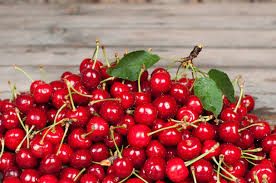
Morello cherry
Prunus cerasus
A sour cherry, bushier and lower than sweet cherry, bearing dark red to almost blackish fruit with soft, sharply acid red flesh and red staining juice. Morello types are distinguished from the pale-fleshed Amarelle sour cherries by that coloured juice. Too tart for most palates raw, it is the traditional fruit for pies, jam, bottling and cherry brandy.
A long-cultivated tree of orchards, kitchen gardens and old farmsteads across Britain and Ireland, often trained against north-facing walls since it fruits in shade. Suckers freely and persists or spreads into hedgerows, scrub and railway banks long after planting.
The flesh is safe to eat; the kernels are not. Stones, leaves and twigs contain cyanogenic compounds, so avoid cracking stones into preserves or leaving them in a long-steeped liqueur. Very sharp raw, and acidic enough to trouble sensitive teeth. Old orchard trees may have a spraying history worth asking about.
Always use more than one reference to confirm a plant. You are responsible for what you choose to forage.
Habit
A rounded, twiggy tree or large shrub to about six metres, frequently multi-stemmed and throwing suckers from the base. Sweet cherry by contrast builds a single tall trunk with a taller, more pyramidal crown.
Fruit and juice
Skin dark red deepening to near black, flesh soft and red, and the juice stains red on the fingers. Pale yellowish flesh with near-colourless juice means an Amarelle sour cherry rather than a Morello.
Fruit arrangement
Fruit sits on short spurs on two-year-old and older wood, in ones, twos or threes on stalks of roughly equal length, not gathered into an elongated hanging string.
Leaves
Smaller, stiffer and glossier than sweet cherry leaves, dark green with sharp regular teeth, and held stiffly outward rather than drooping. Two small glands usually sit at the top of the leaf stalk.
Updated 2026-08-08T12:03:27.521Z · Part of the shared Foragers Log catalogue · Fruit