Ginger
Zingiber officinale
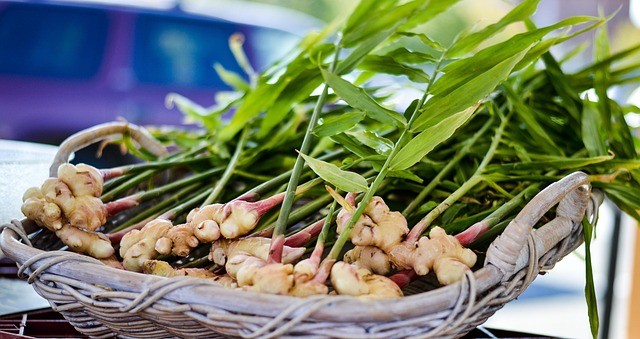
A tender tropical perennial grown for its knobbly, aromatic rhizome. Erect reed-like shoots reach about a metre, carrying narrow, glossy leaves in two opposite ranks. The rhizome branches into flattened 'hands' with buff, ringed skin and pale yellow, fibrous flesh that smells sharply of lemon and pine when broken. Known only in cultivation.
A plant of warm, humid tropical Asia, not known in the wild anywhere. In Britain and Ireland it is grown under glass, in a conservatory or indoors, in deep pots of rich, free-draining compost; it has no frost tolerance and dies back in cool conditions.
The rhizome is an everyday culinary ingredient and is safe in normal cooking quantities, fresh or dried. Fresh juice can sting broken skin or the eyes. The plant is tropical and grows here only under cover, so nothing dug from a British hedgerow or wood is this species.
Always use more than one reference to confirm a plant. You are responsible for what you choose to forage.
Shoots and leaves
Slender, unbranched pseudostems 60–120cm tall, leafy along their length. Leaves are narrow and lanceolate, hairless, set in two flat ranks along opposite sides of the stem — not the broad, paddle-shaped leaves of turmeric, which is the other rhizome most often grown alongside it.
Rhizome shape and flesh
Grows horizontally just under the surface, branching into flattened, finger-like lobes with buff skin marked by pale ring scars. Cut flesh is pale straw-yellow and fibrous. Turmeric flesh is vivid orange and stains; galangal is harder, woodier and banded pink at the base.
Flowering
Rarely flowers in British cultivation. When it does, the flower spike comes up on its own short stalk from the base of the clump, separate from the leafy shoots: a dense green cone of overlapping bracts with small pale yellow flowers and a purple, cream-flecked lip.
Scent when broken
Snapping a fresh rhizome releases an immediate sharp, lemony, resinous smell with heat behind it. A rhizome that smells earthy, musty or of carrot is not this plant, whatever it looks like.
Updated 2026-08-07T20:57:54.225Z · Part of the shared Foragers Log catalogue · Vegetable