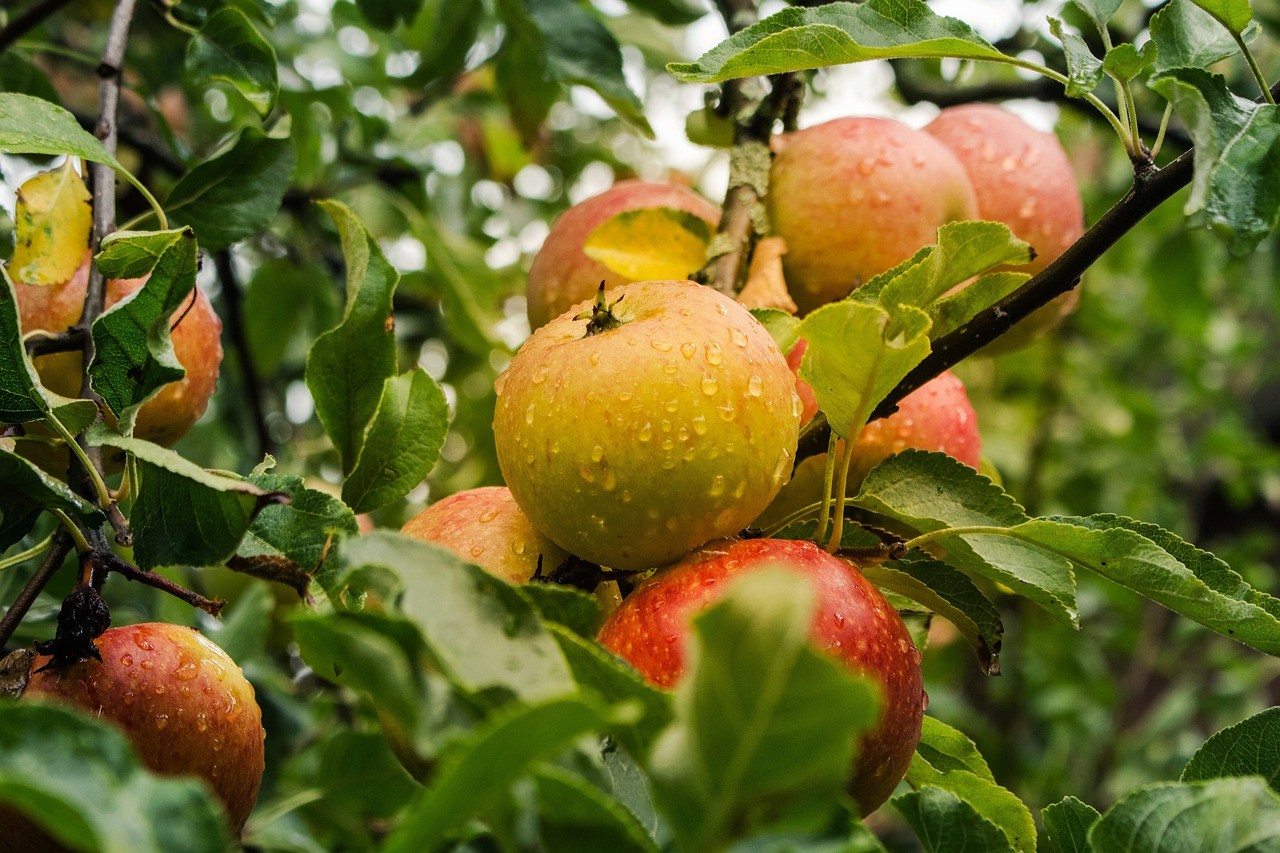
Crab Apple
Malus sylvestris
A small, twiggy hedgerow tree, often armed with short spine-tipped side shoots, carrying hard yellow-green apples 2–4 cm across that are usually flushed dull red on one side. White flowers with a pink reverse open in May. The fruit is too sour and astringent to enjoy raw, but it is exceptionally high in pectin and makes a firm, clear jelly and a useful setting base for softer fruit.
Native in old hedgerows, ancient woodland edges and neglected scrub, usually on heavier soils, and widespread across Britain and Ireland though thinning towards northern Scotland. Naturalised domestic apples share the same ground, especially along roads, railways and field margins.
The fruit is sharply acid and astringent rather than harmful, though a quantity eaten raw can upset the stomach. Pips contain cyanogenic compounds, as in any apple, so are best not chewed in bulk. Wild trees carry stiff, spine-tipped shoots at picking height.
Always use more than one reference to confirm a plant. You are responsible for what you choose to forage.
Growth form and thorns
Dense and twiggy, rarely above 10 m, with many short side shoots that end in a hard spine. Naturalised domestic apple trees are thornless and more openly branched, which separates the two from several metres away.
Fruit
Hard pomes 2–4 cm across, yellow-green with a dull red flush, on a stalk about as long as the fruit itself. A windfall you cannot dent with a thumbnail is a crab rather than an escaped dessert apple.
Leaves and young twigs
Oval, finely toothed leaves that are hairless beneath once fully out, carried on hairless young shoots. Persistent grey felt on the leaf underside or shoot points to domestic apple or a hybrid rather than true wild stock.
Cut fruit
Flesh is white, dense and mouth-puckeringly acid, with five seed chambers in a star. The high acid and pectin are why juice from it sets without any added pectin.
Updated 2026-08-07T20:46:07.545Z · Part of the shared Foragers Log catalogue · Fruit