Beurre Giffard Pear
Pyrus communis
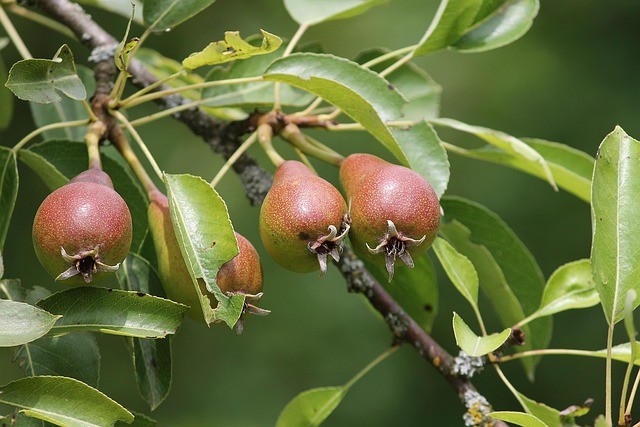
A very early dessert pear: small to medium fruit, distinctly tapering at the neck, with smooth pale yellow-green skin and a dull red flush on the sunward cheek. The flesh is white, fine and melting, sweet and juicy with little grit. Raised in France in the early nineteenth century and grown for its season rather than its keeping — it ripens in late summer, bruises easily and lasts only days off the tree.
A cultivated orchard tree rather than a wild one, found in gardens, old farm and estate orchards, and occasionally persisting as a relict tree in hedges around abandoned holdings. Prefers deep, warm, well-drained soil with shelter from wind.
Eaten raw with no toxicity concern. The pips contain small amounts of cyanogenic glycosides and are better spat out than crushed and swallowed in quantity. Trees in old commercial orchards or on roadsides may carry spray residue or traffic dirt, and windfalls draw wasps; this variety bruises and turns to brown rot quickly, so damaged fruit is worth discarding.
Always use more than one reference to confirm a plant. You are responsible for what you choose to forage.
Fruit shape and skin
Small to medium, clearly pyriform with a slender tapering neck. Skin is smooth pale green turning yellow, with a dull brownish-red flush where the sun has reached it and only scattered russet dots — not the overall dry cinnamon russet of Conference.
Flesh and eating window
White, fine-grained, melting and very juicy, sweet without the stony grit of a cooking pear. It ripens from the core outwards within a few days of picking, so pick firm and eat within the week; left on the tree it goes soft and mealy at the centre.
Season
One of the earliest European pears, ready weeks before main-season varieties. A pear tree carrying ripe fruit in late July is an early cultivar of this sort rather than Conference or Comice, which are still hard at that date.
Tree habit
Slender branches that arch and droop, giving a thin, weeping crown. Growth is only moderate and the tree does poorly on thin dry soil, so it is often seen as a small, rather sparse orchard tree beside more vigorous neighbours.
Updated 2026-08-07T20:30:47.784Z · Part of the shared Foragers Log catalogue · Fruit