James Grieve Apple
Malus domestica
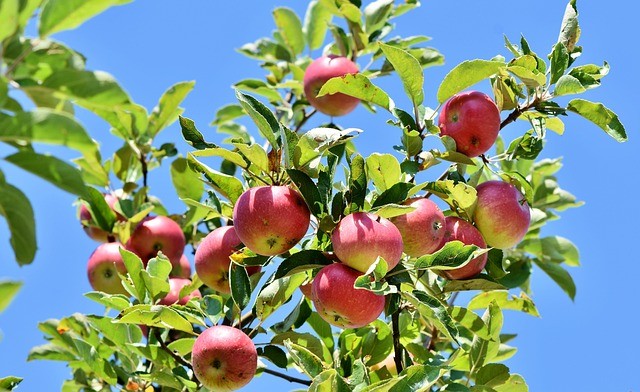
An early-season dessert apple raised near Edinburgh in the 1890s. The fruit is round and faintly ribbed, pale greenish-yellow ripening to gold with a broken orange-red flush over the sunny side. The soft white flesh is very juicy, sharp at picking and mellowing within a few days. It bruises at a touch and keeps only a few weeks, so it is eaten or cooked soon after gathering.
Not a wild tree. Planted in orchards, gardens and allotments throughout Britain and Ireland, and hardy enough to crop well in cool, wet northern summers, which is why it is common in Scotland and northern England. Seedlings occasionally appear in hedgerows and on waste ground from discarded cores, but they do not come true to the cultivar.
Edible raw or cooked. The pips contain amygdalin and are best cored out rather than milled whole when pressing fruit in quantity. Windfalls ferment quickly and draw wasps, so look the fruit over before lifting it. Orchard and garden trees are owned by someone; ask before picking.
Always use more than one reference to confirm a plant. You are responsible for what you choose to forage.
Fruit
Roundish and faintly ribbed, around 6–7cm across, pale greenish-yellow ripening to gold with a broken orange-red flush and short stripes on the sunny side. The flush and striping separate it from green-skinned cookers such as Bramley.
Flesh and flavour
White, faintly tinged yellow, soft-textured and very juicy. Sharp on the day of picking, mellowing to a light balanced sweetness within a week. It breaks down to a purée when cooked rather than holding its shape in slices.
Keeping quality
The skin is thin and the flesh marks at the slightest knock, so fruit has to be picked by hand rather than shaken down. Two to three weeks is the limit in store, which is why the variety is rarely seen in shops.
Blossom and tree
Moderately vigorous with abundant mid-season blossom, widely planted as a pollinator for other apples. Partially self-fertile, so a lone tree still sets a crop, though a neighbour improves it.
Updated 2026-08-07T20:37:44.972Z · Part of the shared Foragers Log catalogue · Fruit