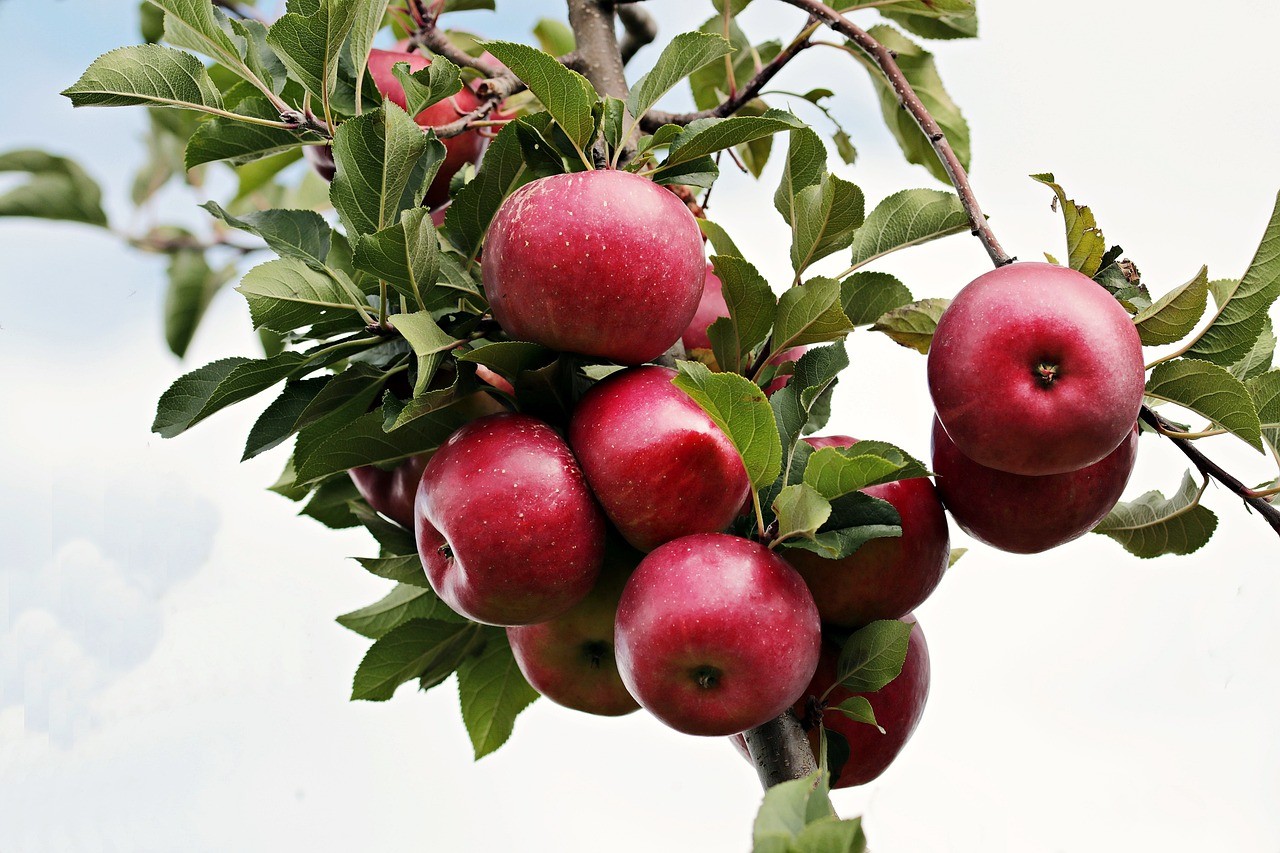
Discovery Apple
Malus domestica
An early dessert apple, small to medium and slightly flattened, with a bright crimson flush over a pale greenish-yellow ground and crisp white flesh that is often tinged pink just beneath the skin. The flavour is sharp-sweet with a strawberry note when the fruit is caught at the right moment. It softens quickly and keeps only a week or two, so it is a tree to pick from and eat from rather than to store.
A grafted garden and orchard tree rather than a wild one, planted widely across England and Ireland in gardens, allotments and community orchards. Odd trees appear on railway banks, field edges and roadside scrub from discarded cores, though seedlings do not come true to the parent.
The ripe flesh is safe raw and needs no preparation. The pips contain amygdalin and are not worth eating in quantity, although swallowing a few whole is of no consequence. Windfalls attract wasps, and fruit from roadside or trackside trees may carry traffic grime or spray residue, so wash before eating. Fruit on private or orchard land needs the owner's permission.
Always use more than one reference to confirm a plant. You are responsible for what you choose to forage.
Fruit
Small to medium, slightly flattened, with a deep crimson flush over greenish-yellow and a smooth, almost waxy skin. Cut one across: the white flesh is frequently stained pink immediately under the red skin, which few other early apples show.
Season and keeping quality
Ready from mid-August, weeks ahead of Cox or Bramley, and among the first apples of the year to eat. It will not store — a fortnight at best, after which the flesh turns dry and cottony.
Flavour
Crisp and juicy, sharp-sweet, with a distinct strawberry character. Picked too early it is merely acid and hard; the strawberry note is the sign the fruit is ready.
Blossom
White, pink-tinged in bud, opening mid-season in late April or early May. Flowering overlaps with most common garden apples, so a lone tree usually sets fruit where others are nearby.
Always a grafted tree
Encountered only as a grafted cultivar. Pips from a Discovery apple grow into seedlings unlike the parent, so a self-sown tree on a railway bank or verge should be treated as an unnamed apple, not as this one.
Updated 2026-08-07T20:34:19.318Z · Part of the shared Foragers Log catalogue · Fruit